
In modern industrial, automotive, and aerospace applications, the demand for sensors capable of operating reliably in high-temperature environments is rapidly increasing. Conventional silicon (Si) sensors, while widely used for moderate temperature applications, face significant limitations when exposed to extreme heat. Silicon carbide (SiC), a wide-bandgap semiconductor material, has emerged as a superior alternative due to its exceptional thermal, electrical, and mechanical properties. This article explores why SiC outperforms silicon in high-temperature sensing, focusing on material characteristics, device performance, and practical applications.
1. Material Advantages of Silicon Carbide
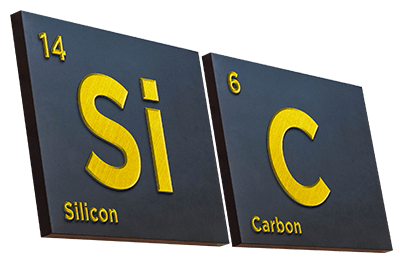
Silicon carbide is characterized by a wide bandgap of approximately 3.26 eV and high thermal conductivity, roughly 490 W/m·K depending on the crystal structure. In contrast, silicon has a narrower bandgap of 1.12 eV and a thermal conductivity of ~150 W/m·K. These differences are fundamental: a wide bandgap reduces intrinsic carrier generation at elevated temperatures, while high thermal conductivity improves heat dissipation.
Key advantages of SiC include:
- High-Temperature Stability: SiC-based devices can operate continuously at temperatures ranging from 400°C to 600°C. Conventional silicon sensors typically degrade above 150–200°C due to increased leakage currents and material instability.
- Low Leakage Currents: The reduced intrinsic carrier concentration of SiC minimizes leakage current, which is critical for maintaining sensor accuracy under high-temperature conditions.
- Superior Thermal Shock Resistance: SiC’s high thermal conductivity allows rapid heat dissipation, reducing the risk of localized overheating, which is a common failure mechanism in silicon devices.
- Mechanical Robustness: SiC exhibits higher hardness and chemical inertness, making it more resistant to mechanical stress, abrasion, and chemical corrosion in harsh environments.
2. Performance Comparison: SiC vs. Silicon
| Parameter | Silicon (Si) | Silicon Carbide (SiC) |
|---|---|---|
| Bandgap | 1.12 eV | 3.26 eV |
| Thermal Conductivity | ~150 W/m·K | ~490 W/m·K |
| Maximum Operating Temperature | ~150–200°C | 400–600°C |
| Leakage Current at High Temp | High | Low |
| Thermal Shock Resistance | Moderate | Excellent |
| Device Lifetime in High Temp | Limited | Extended |
From this comparison, it is evident that SiC offers superior thermal management and reliability, especially in environments where temperature fluctuations and extreme heat are common.
3. Applications in High-Temperature Environments
High-temperature sensors are increasingly required in automotive, aerospace, and industrial applications:
- Automotive Engines: Monitoring exhaust gas temperature, turbocharger, and catalytic converter temperatures, often exceeding 500°C. SiC sensors provide accurate readings without performance drift, improving engine efficiency and emission control.
- Aerospace Turbine Engines: Critical components such as turbine blades and combustion chambers operate under extreme temperatures. SiC sensors maintain precision in pressure, temperature, and flow measurements, ensuring safe and efficient engine operation.
- Industrial Process Control: High-temperature manufacturing processes, including steelmaking, glass production, and chemical reactors, demand sensors that can withstand corrosive environments and high heat without failure.
In all these applications, silicon sensors often experience measurement drift, reduced sensitivity, or catastrophic failure due to thermal stress. SiC’s material properties enable devices to maintain long-term accuracy, reliability, and safety.
4. Advantages Beyond Thermal Management
Beyond superior thermal performance, SiC sensors offer additional benefits that enhance overall system efficiency:
- Enhanced Signal-to-Noise Ratio: Low leakage currents and thermal stability result in cleaner, more reliable sensor signals.
- Compact and Robust Designs: High thermal conductivity allows for smaller device footprints without compromising heat dissipation. This facilitates integration into compact and high-density systems.
- Longevity and Reliability: SiC sensors maintain consistent performance over prolonged operation in high-temperature and harsh chemical environments, reducing maintenance costs and downtime.
These advantages make SiC a preferred material not only for temperature and pressure sensors but also for power electronics and other semiconductor devices requiring high-temperature stability.
5. Conclusion
Silicon carbide has established itself as the material of choice for high-temperature sensors across automotive, aerospace, and industrial sectors. Its wide bandgap, high thermal conductivity, and excellent mechanical properties allow SiC-based devices to outperform conventional silicon sensors under extreme conditions. By leveraging SiC technology, engineers can achieve precise, reliable, and long-lasting sensing in environments that would challenge or exceed the limits of silicon.
As industries continue to push operational temperatures higher, SiC sensors will play an increasingly crucial role in enhancing system performance, safety, and reliability. For researchers and engineers designing next-generation high-temperature sensing systems, understanding and adopting SiC-based solutions is no longer optional—it is essential.