
Silicon carbide (SiC) wafers have become one of the most important wide-bandgap semiconductor substrates in power electronics, RF communication, and high-temperature applications. Among the most widely used types are N-type SiC wafers und semi-insulating SiC-Wafer.
Although they may look similar physically, their electrical behavior and application fields are fundamentally different. Choosing the wrong type can lead to device failure, signal loss, or poor system performance.
This article explains their core differences, properties, and where each type is typically used in industrial applications.
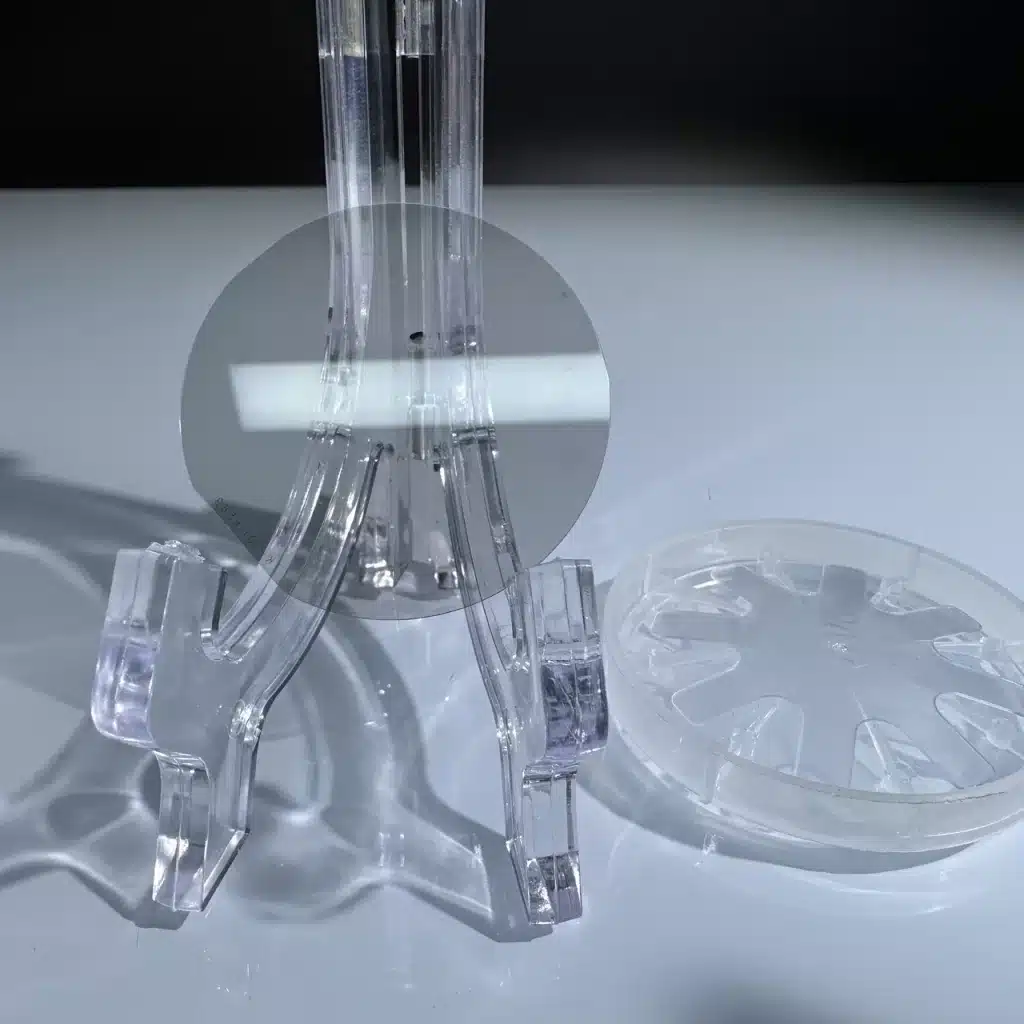
1. What Is an N-Type SiC Wafer?
An N-type SiC wafer is doped with donor impurities (typically nitrogen), which introduces extra free electrons into the crystal structure.
Key characteristics:
- Conductive semiconductor material
- High electron concentration
- Stable performance at high voltage and high temperature
- Suitable for active device fabrication
Because of its controlled conductivity, N-type SiC is widely used in power device manufacturing.
Typical electrical behavior:
- Moderate resistivity
- Electron-dominant conduction
- Supports current flow in devices
2. What Is a Semi-Insulating SiC Wafer?
A semi-insulating SiC wafer is engineered to have extremely high electrical resistivity, typically achieved through compensation techniques during crystal growth.
Key characteristics:
- Very high resistivity (near insulating behavior)
- Extremely low leakage current
- Excellent RF isolation properties
- Stable at high frequency and high temperature
Unlike N-type wafers, semi-insulating SiC does not conduct current easily, making it ideal for signal isolation.
3. N-Type vs Semi-Insulating SiC: Core Differences
| Merkmal | N-Type SiC Wafer | Semi-Insulating SiC Wafer |
|---|---|---|
| Electrical Conductivity | Conductive | Highly resistive |
| Doping | Nitrogen-doped | Compensation-grown |
| Trägerstoff-Konzentration | Hoch | Äußerst gering |
| Main Function | Power conduction | Signal isolation |
| Widerstandsfähigkeit | Low to moderate | Sehr hoch |
| Typische Verwendung | Power devices | RF & microwave devices |
4. Manufacturing Differences
The difference between these two wafers starts at the crystal growth stage:
N-Type SiC:
- Controlled nitrogen doping during growth
- Focus on uniform conductivity
- Optimized for power electronics yield
Semi-Insulating SiC:
- Compensation of donor and acceptor defects
- Very strict impurity control
- Requires higher crystal purity and defect management
Semi-insulating SiC wafers are generally more difficult and expensive to produce due to stricter quality requirements.
5. Applications of N-Type SiC Wafers
N-type SiC wafers are widely used in high-power and high-efficiency electronic devices, such as:
- Power MOSFETs
- Schottky diodes
- IGBTs (SiC hybrid designs)
- Electric vehicle power modules
- Industrial power conversion systems
- Solar inverters
Why N-type SiC is preferred:
- Hohe Wärmeleitfähigkeit
- Hohe Durchbruchspannung
- Low switching losses
- Excellent efficiency in power conversion
6. Applications of Semi-Insulating SiC Wafers
Semi-insulating SiC wafers are mainly used in high-frequency and RF systems, including:
- RF power amplifiers (GaN-on-SiC substrates)
- Microwave communication devices
- Radar systems
- Satellite communication systems
- 5G base stations
- High-frequency MMIC devices
Why semi-insulating SiC is preferred:
- Minimal signal loss
- Excellent RF isolation
- High-frequency stability
- Reduced parasitic capacitance
7. How to Choose the Right SiC Wafer?
Choosing between N-type and semi-insulating SiC depends on the final device function:
Choose N-type SiC if you need:
- Power switching capability
- High current conduction
- Energy efficiency in power systems
Choose semi-insulating SiC if you need:
- High-frequency signal transmission
- RF or microwave performance
- Electrical isolation between components
8. Industry Trend: GaN-on-SiC Growth
One of the most important trends is the combination of GaN epitaxy on semi-insulating SiC substrates, which enables:
- Higher frequency operation
- Better thermal management
- Higher power density
- Improved efficiency in 5G and radar systems
This trend is increasing demand for high-quality semi-insulating SiC wafers globally.
9. Schlussfolgerung
N-type and semi-insulating SiC wafers serve two very different but equally important roles in modern electronics.
- N-type SiC → power conduction and energy systems
- Semi-insulating SiC → RF, microwave, and high-frequency applications
Understanding these differences helps engineers and procurement teams select the right substrate for performance, reliability, and cost efficiency.