
Silicon carbide (SiC) wafers have become a cornerstone material in modern power electronics, high-temperature devices, and wide-bandgap semiconductors. While much attention is paid to wafer size, thickness, and surface quality, the edge profile—the shape and finish of the wafer’s perimeter—is often overlooked. However, it plays a critical role in mechanical stability, device yield, and fabrication reliability.
This article explores what edge profiles are, how they are formed, and why they are crucial for semiconductor applications.
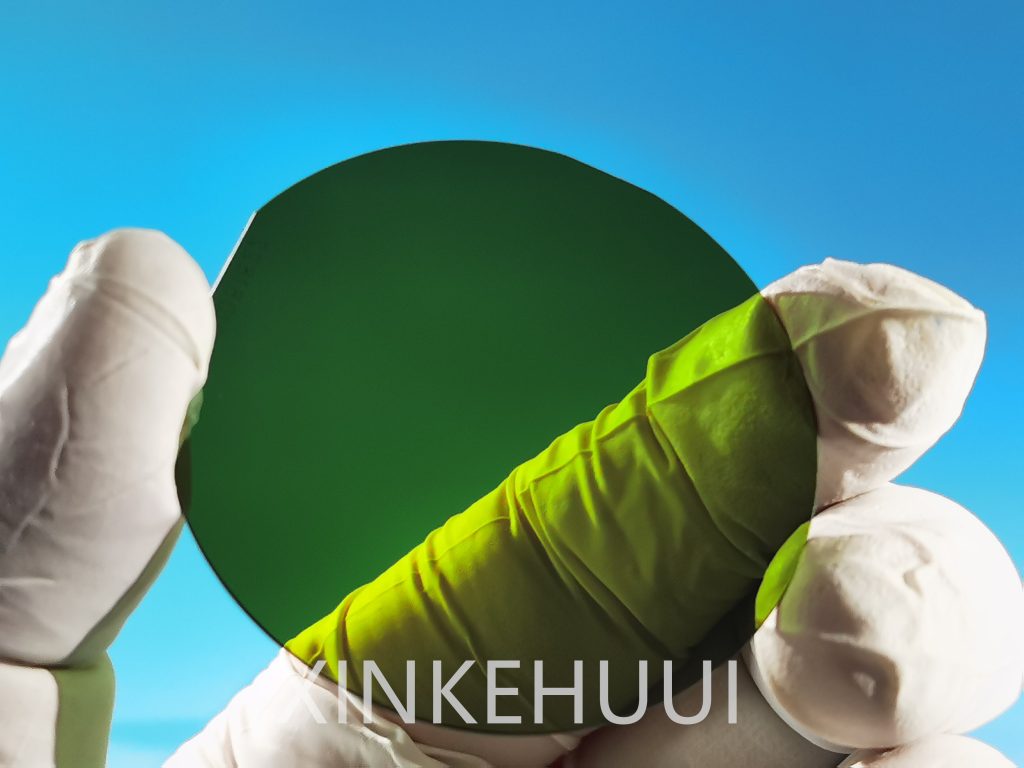
1. What Is an Edge Profile?
En edge profile refers to the geometry and quality of the wafer’s outer rim, including:
- Chamfering: a beveled edge to reduce fragility
- Radius of curvature: the roundness of the edge
- Edge defects: micro-cracks, chips, or roughness caused during slicing or grinding
In SiC wafers, which are hard and brittle, edge imperfections can propagate into the wafer body, causing mechanical failure or reduced yield.
2. How Edge Profiles Are Formed
Edge profiles are primarily shaped during the wafering process, which includes:
- Ingot slicing: using diamond wire saws or inner-diameter (ID) saws to cut wafers from a SiC boule
- Edge grinding: removing micro-chips and shaping the wafer edge to a standard bevel
- Polishing / lapping: smoothing the edge to reduce stress concentration points
Key factors influencing edge profiles:
- Blade thickness and wire tension
- Feed rate and cutting speed
- Cooling and lubrication
- Material anisotropy and defects in the boule
The result is a combination of mechanical rounding, chamfer size, and surface smoothness.
3. Types of Edge Profiles
Common SiC wafer edge profiles include:
| Tipo de borde | Descripción | Uso típico |
|---|---|---|
| Flat / Straight | Minimal bevel, sharp edge | Optical wafers, laboratory analysis |
| Chamfered | 20–45° bevel | Standard for mechanical stability in processing |
| Rounded / Radius | Smooth curvature | High-reliability power devices |
| Bevel + Radius | Combination for stress reduction | High-end device wafers, large diameter |
Each profile balances mechanical robustness, handling safety, y device yield.
4. Why Edge Profiles Matter
4.1 Mechanical Stability
- SiC is hard but brittle, with low fracture toughness
- Sharp or uneven edges can lead to cracking during handling or thermal cycling
- Proper edge profiles reduce the risk of wafer breakage during polishing, epitaxy, or packaging
4.2 Yield and Device Performance
- Edge cracks can propagate inward, affecting active device areas
- Stress concentration at the edge can warp the wafer, impacting lithography and epitaxial layer uniformity
- High-quality edge profiles correlate with higher die yield and fewer defective devices
4.3 Compatibility with Automation
- Many fabs use automated wafer handling robots
- Wafers with non-uniform edges are prone to misalignment or slipping
- Standardized chamfered or rounded edges improve handling reliability
5. Measurement and Standards
Edge profiles are characterized using:
- Optical microscopy: for micro-cracks or chipping
- Laser scanning: to measure bevel angles and radius
- Mechanical stylus profilometry: for curvature analysis
Standards such as SEMATECH guidelines o JEDEC specifications define acceptable bevel width, radius, and edge quality for SiC wafers.
6. Implications for Device Manufacturers
Proper edge profiles influence:
- High-voltage power devices: edge cracks reduce breakdown voltage reliability
- LED and GaN-on-SiC wafers: stress-free edges reduce threading dislocations near the wafer perimeter
- Large-diameter wafers (150 mm, 200 mm, 300 mm): edge handling becomes critical as diameter increases
Ignoring edge profile optimization can lead to wafer breakage, yield loss, and increased production costs.
7. Conclusión
Edge profiles, though a small part of the wafer geometry, have outsized importance in SiC wafer performance. Properly designed and finished edges:
- Enhance resistencia mecánica
- Reduce stress propagation
- Improve device yield and reliability
- Facilitate automated handling in fabs
For engineers and manufacturers working with semiconductores de banda prohibida ancha, understanding and controlling SiC wafer edge profiles is a key factor in achieving high-quality, high-yield devices.