
In the global SiC landscape, headlines tend to focus on high-volume 6-inch or 8-inch wafers used for power electronics. Yet in 2025 and moving into 2026, 4-inch semi-insulating (SI) silicon carbide wafers are undergoing their own quiet transformation in North America. This niche market is shaped by policy incentives, specialized high-frequency applications, and a gradual shift toward more sustainable and predictable growth.
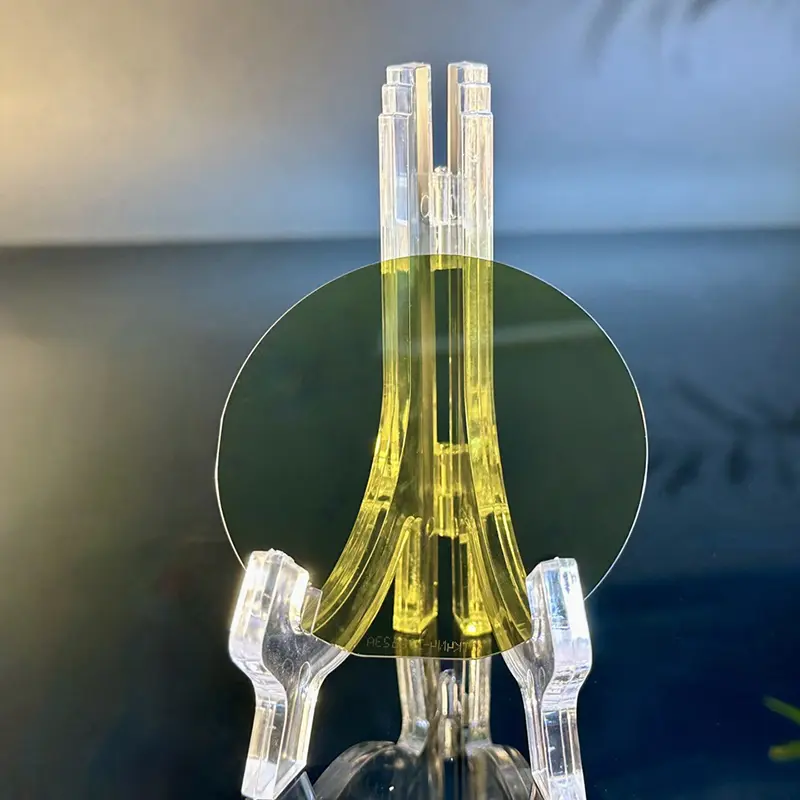
1. Market Size and Growth Outlook (2025–2026)
Data from MarketGrowthReports estimates that the global 4-inch semi-insulating SiC wafer segment will reach about USD 98.3 million in 2025. Market Research Future projects the North American 4-inch SI SiC segment to grow at a 6.5% CAGR from 2025 onward, supported by consistent demand and expanding domestic capabilities.
More broadly, semi-insulating SiC substrates are part of a larger trend: the global SI SiC wafer industry is expected to expand significantly toward 2033, with many forecasts indicating a sharp uptick beginning around 2026. This places North America in a stable, strategically important position within the market.
2. Where the Demand Comes From
High-frequency and RF systems
Semi-insulating SiC offers high resistivity and reduced parasitics, making it highly suitable for RF devices, radar modules, satellite communications, base-station components, and other microwave systems. These applications often rely on 4-inch wafers because the production equipment, qualification cycles, and device designs were built around this diameter.
Defense and aerospace
North America’s defense and aerospace sectors value SI SiC for its exceptional thermal stability, breakdown voltage, and long-term reliability. Because programs in these industries often run for many years, demand for 4-inch wafers remains steady rather than cyclical.
R&D and prototyping
Universities, research labs, and next-generation semiconductor startups frequently use 4-inch SI SiC substrates for prototyping, characterization, and low-volume fabrication. This creates a consistent baseline demand that doesn’t fluctuate as sharply as the EV or consumer-electronics sectors.
3. The Forces Reshaping the Market
Government policy and supply-chain incentives
U.S. government initiatives continue to push for SiC material and wafer manufacturing to be localized. Federal loans, grants, and strategic-industry programs support new SiC capacity, helping offset the financial burden of producing lower-volume, higher-value wafers like 4-inch SI types.
Technology improvements
Crystal growth processes continue to mature, with better control over defect densities and resistivity uniformity. These improvements make 4-inch SI SiC more attractive for high-performance applications and help manufacturers maintain competitiveness even as the industry shifts toward larger diameters.
Market caution in EV and power devices
While EVs drive bulk SiC wafer demand globally, recent slowdowns in EV investments have caused some SiC suppliers to adjust production targets. This doesn’t directly harm 4-inch SI wafers—since they mainly serve RF and defense—but it influences overall wafer-fab resource allocation and long-term planning.
4. Challenges Facing the Segment
Competition from 6-inch and 8-inch wafers
Larger diameters offer cost efficiencies for power devices, and many manufacturers prioritize expanding these lines first. This can constrain investment in maintaining or upgrading 4-inch SI capacity if suppliers view it as less profitable.
Cost pressure
SiC wafer prices have been trending downward across the industry. While SI wafers maintain higher margins, pricing pressure may intensify if more suppliers enter the specialty SI segment.
Dependence on policy support
Some North American producers rely heavily on government incentives. Any shift in policy direction may disrupt their medium-term expansion plans, particularly for specialized wafer types that don’t have massive volume.
5. Strategic Recommendations for 2025–2026
For wafer manufacturers
- Double down on specialization: ultra-high resistivity, low-defect wafers, and customized parameters.
- Maintain flexible lines capable of switching between SI and conductive products.
- Secure long-term commitments from defense and RF clients.
For device makers
- Secure supply early, as competition for SI wafer capacity may increase.
- Engage manufacturers on custom resistivity and thickness requirements.
- Consider dual-sourcing strategies to minimize supply-chain risk.
For investors and policymakers
- Support companies with deep materials expertise rather than those pursuing only volume scale.
- Encourage partnerships between wafer producers and RF/defense contractors.
- Prioritize funding for SI wafer research that improves defect reduction and yield.
6. Outlook for 2026 and Beyond
By 2026, North America’s 4-inch semi-insulating SiC wafer market will not be the largest part of the SiC ecosystem, but it will be one of the most strategically significant. Its strength lies in targeted, high-value applications that require material quality and reliability more than wafer size. With government support, maturing technology, and stable demand from RF and defense industries, the segment is positioned for sustainable growth.
As SiC markets continue evolving, 4-inch SI wafers may remain a small but indispensable cornerstone for industries where performance and precision matter more than scale.