
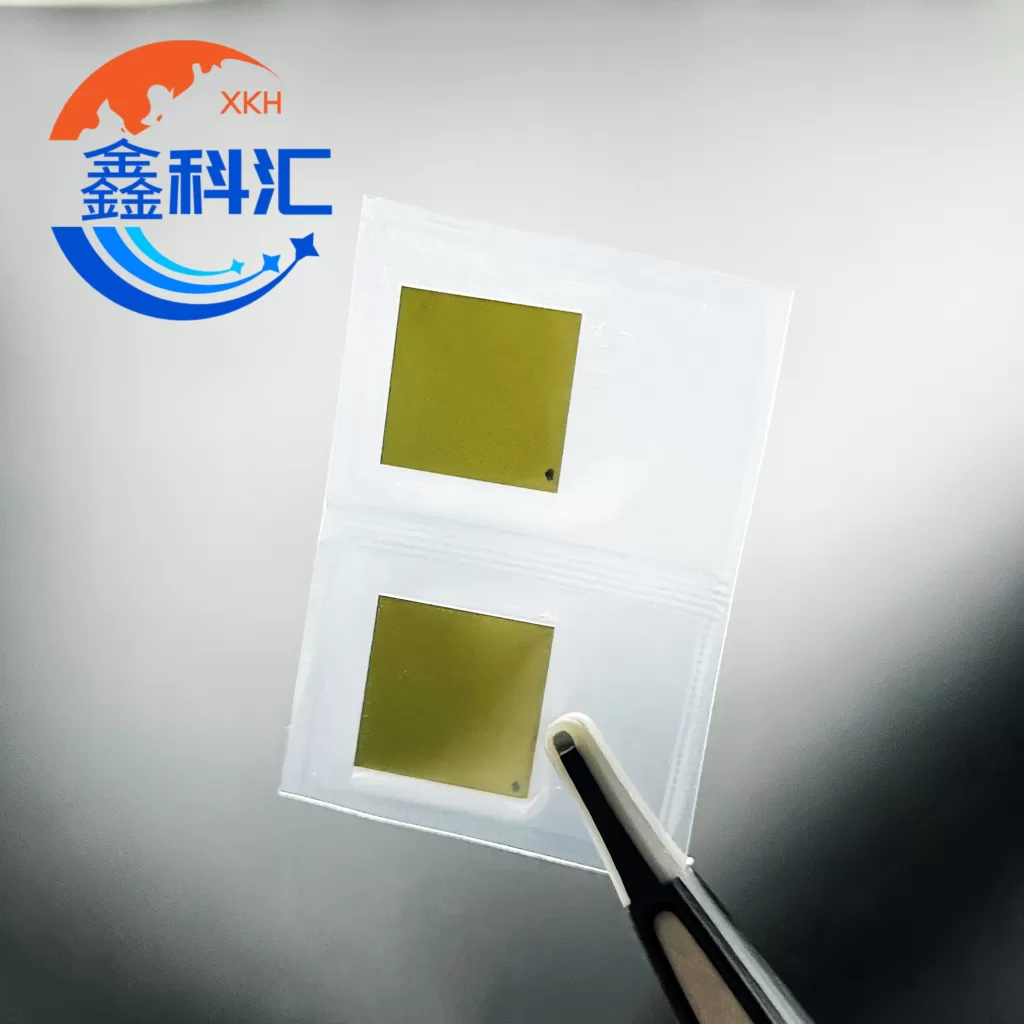
Silicon carbide (SiC) wafers have rapidly gained attention in high-frequency and high-power electronics due to their superior material properties compared to conventional silicon (Si). With a combination of wide bandgap, high thermal conductivity, and high breakdown electric field, Substrati di SiC provide performance advantages for RF devices, microwave transceivers, and high-speed power electronics. While these advantages make SiC an attractive material for next-generation high-frequency applications, practical limitations in manufacturing, cost, and device integration remain significant considerations.
Material Advantages of SiC Wafers
1. Wide Bandgap Enables High-Voltage and High-Temperature Operation
One of the most notable properties of SiC is its wide bandgap. For the commonly used 4H-SiC polytype, the bandgap is approximately 3.26 eV, nearly three times that of silicon (1.12 eV). This wide bandgap allows SiC devices to operate at higher voltages and temperatures without substantial leakage currents. In high-frequency RF amplifiers, this translates to improved power handling and thermal stability, which is essential for applications in automotive radar, aerospace communication systems, and defense electronics where environmental conditions can be extreme.
2. High Electron Saturation Velocity
High-frequency applications demand rapid switching capabilities. SiC supports electron saturation velocities up to 2 × 10^7 cm/s, significantly higher than silicon’s 1 × 10^7 cm/s. This property allows devices to achieve higher cutoff frequencies (fT) and better performance in the GHz and millimeter-wave frequency bands. High electron mobility combined with low on-resistance enables engineers to design more efficient transistors and power amplifiers that meet demanding high-frequency specifications.
3. Superior Thermal Conductivity
Thermal management is a critical factor in high-power RF and microwave devices. SiC exhibits thermal conductivity exceeding 3.5 W/cm·K, compared to silicon’s 1.5 W/cm·K. This exceptional thermal property allows devices to dissipate heat efficiently, maintaining performance stability even under high current and high-frequency operation. Consequently, designers can implement more compact module layouts without risking thermal-induced failures or performance degradation.
4. High Breakdown Electric Field
SiC has a breakdown field of around 3 MV/cm, roughly ten times higher than silicon. This allows for thinner device layers in high-voltage transistors, reducing on-resistance and enabling higher efficiency in switching circuits. For high-frequency power amplifiers, this property ensures that devices can handle significant voltage swings while maintaining linearity and reliability.
Practical Limitations and Challenges
While SiC wafers offer superior properties, several practical challenges must be considered:
1. High Cost and Limited Availability
The production cost of SiC wafers is significantly higher than that of silicon, especially for diameters of 150 mm or larger. This cost can limit the widespread adoption of SiC in consumer electronics or low-margin applications, confining its use primarily to industrial, automotive, and defense sectors where performance outweighs cost concerns.
2. Crystal Defects and Yield Limitations
SiC crystal growth is inherently more complex than silicon due to its polytypism and high melting temperature. Defects such as basal plane dislocations (BPDs), micropipes, and stacking faults are common. These defects reduce device yield and reliability, particularly in high-frequency RF applications where even minor inconsistencies can affect gain, linearity, and thermal stability. Selecting low-defect-density wafers is essential for high-performance devices.
3. Mechanical Hardness and Processing Challenges
SiC’s hardness (~9 Mohs) makes it difficult to polish and etch, necessitating advanced chemical mechanical polishing (CMP) and dry etching techniques. This increases manufacturing complexity and processing costs. Engineers must also consider that handling and integrating SiC wafers require specialized tools and expertise compared to silicon wafers.
4. Interface Quality for MOS Devices
For SiC MOSFETs, the SiC/SiO2 interface often exhibits higher density of interface traps, reducing channel mobility. This limitation can constrain high-frequency switching performance. Mitigation strategies include advanced oxidation processes, post-oxidation annealing, and alternative device structures like JFETs or Schottky barrier diodes, which can partially circumvent these interface limitations.
5. Thermal Expansion Mismatch
Integrating SiC wafers with other materials, such as aluminum nitride (AlN) or silicon, can result in stress due to mismatched coefficients of thermal expansion. Repeated thermal cycling may lead to wafer cracking or delamination, which must be carefully managed during module design, packaging, and assembly.
Practical Applications in High-Frequency Electronics
- RF Power Amplifiers: SiC’s high voltage tolerance and thermal stability make it ideal for base station amplifiers in 5G networks and radar systems.
- High-Speed Switching: SiC MOSFETs and JFETs enable GHz-range switching in power converters, microwave transceivers, and amplifier modules.
- Aerospaziale e difesa: SiC devices’ high-temperature tolerance and radiation resistance are critical for satellite communications and avionics.
- Automotive Radar: High-frequency SiC devices support 77 GHz radar systems, enabling precise sensing in autonomous driving systems.
Performance Comparison: Si vs 4H-SiC Wafers
| Parametro | Silicio (Si) | 4H-SiC | Impact on High-Frequency Applications |
|---|---|---|---|
| Bandgap (eV) | 1.12 | 3.26 | Higher voltage tolerance, reduced leakage at high temperature |
| Electron Saturation Velocity (cm/s) | 1 × 10^7 | 2 × 10^7 | Faster switching, higher fT and RF gain |
| Thermal Conductivity (W/cm·K) | 1.5 | 3.5 | Efficient heat dissipation, higher power density |
| Breakdown Electric Field (MV/cm) | 0.3 | 3 | Thinner device layers, lower on-resistance, improved efficiency |
| Durezza (Mohs) | 7 | 9 | Processing more challenging, requires CMP and dry etching |
| Densità dei difetti | Basso | Medium to high | May impact device yield and reliability |
Conclusione
Silicon carbide wafers are a powerful solution for high-frequency electronic applications, providing high thermal stability, fast switching, and superior voltage handling. Their benefits make them indispensable for RF amplifiers, microwave transceivers, automotive radar, and aerospace electronics. However, challenges such as high material cost, crystal defects, processing complexity, and interface issues must be carefully addressed. By selecting high-quality wafers, optimizing device design, and employing advanced manufacturing techniques, engineers can fully exploit the potential of SiC in demanding high-frequency applications.