
For years, silicon carbide (SiC) has been viewed primarily as a “new energy material” tied to electric vehicles, solar inverters, and industrial power electronics. But the market narrative is changing rapidly.
With the explosive growth of AI computing infrastructure, silicon carbide is becoming a foundational material for next-generation power delivery, advanced packaging, and thermal management systems. What was once an automotive semiconductor story is evolving into a broader AI infrastructure opportunity.
As AI data centers move toward higher power density, 800V HVDC architectures, advanced CoWoS packaging, and extreme thermal loads, SiC is increasingly positioned at the center of the next semiconductor upgrade cycle.
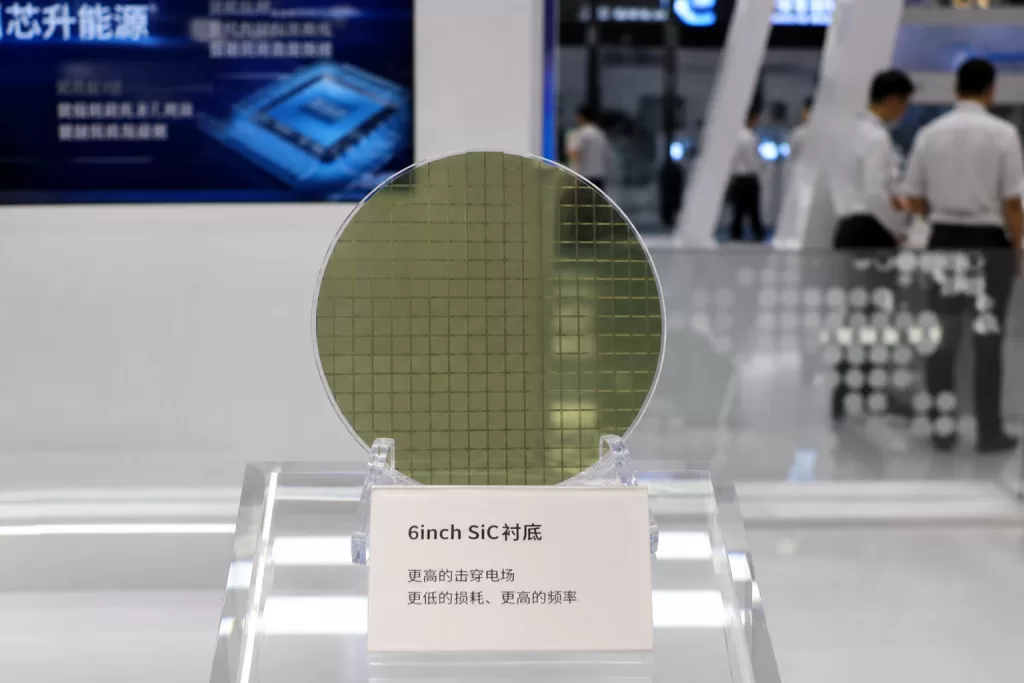
Why AI Infrastructure Is Driving a New SiC Growth Cycle
The first wave of SiC demand came from electric vehicles and renewable energy systems. Applications such as:
- EV traction inverters
- On-board chargers
- Fast charging stations
- Solar inverters
helped expand the global SiC market dramatically over the past decade.
However, the industry is now entering a second growth phase driven by AI computing infrastructure.
Modern AI servers consume significantly more power than traditional servers. As GPU clusters scale upward, power conversion efficiency and thermal management become critical bottlenecks. This is where silicon carbide begins to outperform conventional silicon-based technologies.
From utility power input to GPU-level voltage regulation, nearly every stage of AI power conversion can benefit from wide-bandgap semiconductors such as SiC.
Three Major AI-Driven Opportunities for Silicon Carbide
1. AI Data Center Power Systems
The most immediate growth driver is AI server power architecture.
Large-scale AI clusters are rapidly transitioning toward:
- 800V HVDC power systems
- Solid-state transformers (SST)
- High-efficiency power conversion modules
In these systems, SiC devices offer:
- Lower switching losses
- Higher efficiency
- Higher operating temperatures
- Smaller system size
Compared with traditional silicon IGBTs, SiC MOSFETs significantly reduce power loss in high-density AI environments.
For hyperscale data centers operating 24/7, even small efficiency gains translate into enormous energy savings.
As a result, SiC is becoming a preferred solution for:
- AI server power supplies
- Rack-level power conversion
- ระบบ UPS
- High-voltage DC distribution
Industry analysts expect AI-related power semiconductors to become one of the fastest-growing SiC segments over the next five years.
2. Advanced Packaging and CoWoS Interposers
The second major opportunity comes from advanced semiconductor packaging.
As AI chips become larger and more power-intensive, traditional silicon interposers are approaching thermal and structural limits.
SiC substrates are now being explored as next-generation interposer materials because they provide:
- Much higher thermal conductivity
- Better mechanical strength
- Improved heat dissipation
- Enhanced dimensional stability
Compared with silicon, SiC can support significantly higher thermal loads in advanced packaging architectures.
This trend is particularly important for:
- CoWoS packaging
- Chiplet integration
- High-bandwidth memory systems
- Next-generation AI accelerators
As GPU power consumption continues to rise, thermal management inside advanced packaging becomes increasingly critical.
3. Thermal Management and AI Cooling Systems
Perhaps the most disruptive opportunity is AI thermal management.
AI chips are generating unprecedented heat densities. Traditional cooling technologies are approaching practical limits, especially in ultra-high-performance GPU clusters.
New liquid cooling systems combining:
- Diamond materials
- Silicon carbide substrates
- Advanced cold plate structures
are now emerging as next-generation thermal solutions.
SiC plays a critical role because of its:
- การนำความร้อนสูง
- Structural rigidity
- ความต้านทานการกัดกร่อน
- Compatibility with high-power environments
Future AI cooling systems may rely heavily on SiC-based thermal interfaces and heat-spreading structures.
Why Silicon Carbide Is Superior to Traditional Silicon
| ทรัพย์สิน | ซิลิคอนคาร์ไบด์ | Traditional Silicon |
|---|---|---|
| แบนด์แกป | Wide | Narrow |
| การนำความร้อน | สูง | ปานกลาง |
| Switching efficiency | ยอดเยี่ยม | Lower |
| Heat resistance | เหนือกว่า | จำกัด |
| Voltage handling | สูง | ปานกลาง |
| Energy loss | Lower | Higher |
These advantages become increasingly important as AI systems move toward higher power density and continuous operation.
The Industry Is Moving Beyond Electric Vehicles
Although EV applications remain important, the market structure is changing.
The automotive sector previously dominated SiC demand because of:
- 800V vehicle platforms
- Fast charging infrastructure
- Powertrain electrification
But AI infrastructure may eventually become the largest long-term demand source.
Unlike automotive markets, AI data centers prioritize:
- Efficiency
- ความน่าเชื่อถือ
- ความเสถียรทางความร้อน
- Continuous operation
This often allows higher-margin SiC solutions compared with highly cost-sensitive automotive applications.
Challenges Facing the SiC Industry
Despite strong long-term potential, the industry still faces several challenges.
Oversupply in Low-End Capacity
In recent years, many manufacturers aggressively expanded SiC substrate production. This created oversupply in low-end products while high-end AI-grade capacity remains limited.
The market currently shows a structural imbalance:
- Commodity-grade capacity is abundant
- High-performance, large-diameter substrates remain constrained
Yield and Manufacturing Complexity
Manufacturing high-quality แผ่นเวเฟอร์ซิลิคอนคาร์ไบด์ remains difficult due to:
- Crystal growth complexity
- Defect control challenges
- High polishing requirements
- Process consistency limitations
As wafer sizes transition from 6-inch to 8-inch and eventually 12-inch formats, process control becomes even more critical
Competition From Alternative Materials
Glass interposers and alternative packaging materials may eventually compete with SiC in advanced packaging applications.
However, for ultra-high-power AI systems, SiC currently maintains strong advantages in thermal performance and reliability.
Global Competition Is Intensifying
Major semiconductor and materials companies are accelerating SiC investments.
Key industry participants include:
- Infineon
- Wolfspeed
- onsemi
- STMicroelectronics
- Sanan Optoelectronics
- SICC
- JSG
- TankeBlue
Competition is shifting from simple capacity expansion toward:
- การเพิ่มผลผลิตสูงสุด
- 12-inch substrate development
- AI-grade packaging materials
- High-performance thermal solutions
The next phase of competition will likely focus on technological maturity rather than production scale alone.
The Future of Silicon Carbide in AI Infrastructure
Silicon carbide is no longer just a material for electric vehicles.
It is becoming an enabling technology for:
- AI power architectures
- Advanced semiconductor packaging
- High-density thermal management
- Future high-performance computing systems
As AI infrastructure scales globally, the importance of energy efficiency and heat control will continue increasing.
This structural shift may redefine the long-term value of the entire SiC industry.
For B2B manufacturers, semiconductor suppliers, and advanced materials companies, the AI transition could become the most important growth opportunity in the next decade.