
Silicon carbide (SiC) epitaxy is one of the most critical processes behind today’s high-voltage, high-frequency, and high-efficiency semiconductor devices. Although this thin crystalline layer is invisible to the naked eye, its quality directly determines the performance of electric vehicle inverters, fast chargers, renewable-energy converters, and advanced communication systems.
This article provides a clear and accessible explanation of what SiC epitaxy is, why it matters, and how it is shaping the future of power electronics.
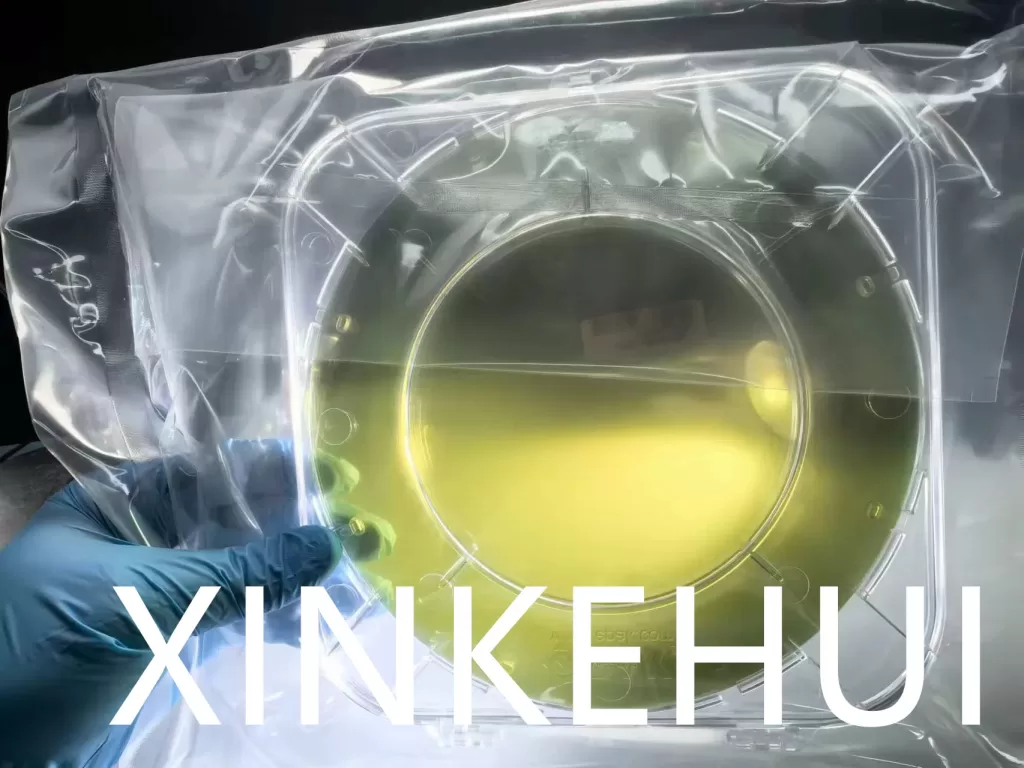
What Is Silicon Carbide Epitaxy?
Epitaxy refers to the growth of a new single-crystal layer on top of a pre-existing single-crystal substrate. In the case of SiC, an epitaxial layer is grown on a SiC wafer to create a highly controlled semiconductor structure.
Unlike the substrate, which provides mechanical strength, the epitaxial layer is engineered specifically for device performance. Its thickness, doping concentration, and crystal quality all affect:
- breakdown voltage
- conduction losses
- switching speed
- Gerätezuverlässigkeit
In short, epitaxy allows the wafer to be “customized” for different applications.
How the Epitaxial Layer Is Grown
The most widely used technique for SiC epitaxy is chemical vapor deposition (CVD). The process can be thought of as “building a crystal from gas.”
- Silicon- and carbon-containing gases (such as silane and propane) are introduced into a high-temperature reactor.
- At 1500–1600°C, the gases decompose and react at the surface of the heated SiC substrate.
- Silicon and carbon atoms arrange themselves according to the substrate’s crystal lattice, forming a new single-crystal SiC layer.
Because the process deals with atomic-level growth, even slight changes in gas flow, temperature, or pressure can alter the final crystal quality. Precision is everything.
Other epitaxy techniques, such as molecular beam epitaxy (MBE) und physical vapor transport (PVT), offer ultra-high precision or higher growth rates, but CVD remains the mainstream method for commercial SiC power devices.
Why Epitaxy Is Essential for SiC Devices
1. Creating the Drift Layer
Most SiC power devices—such as MOSFETs, Schottky diodes, and JFETs—depend on a carefully designed drift region. Its thickness and doping level determine:
- the device’s voltage rating
- switching losses
- forward resistance
Only epitaxy can produce this layer with the required uniformity and purity.
2. Reducing Crystal Defects
SiC substrates inevitably contain defects formed during crystal growth. A high-quality epitaxial layer can “overgrow” many of these defects, resulting in:
- lower leakage currents
- more stable breakdown voltage
- improved reliability at high temperature
The improvement is often dramatic.
3. Supporting High-Frequency and High-Temperature Operation
SiC devices are used in environments where traditional silicon cannot survive. A well-controlled epitaxial layer allows devices to maintain performance at:
- high switching frequencies (tens to hundreds of kHz)
- elevated temperatures (>200°C)
- high power densities
This is a key reason SiC is replacing silicon in many next-generation designs.
Where SiC Epitaxy Makes a Difference
Leistungselektronik
SiC epitaxial wafers are the foundation of high-efficiency power MOSFETs, Schottky diodes, and IGBTs used in:
- electric vehicles
- solar inverters
- energy-storage systems
- industrial motor drives
- smart grids
These devices operate more efficiently with lower heat generation, allowing smaller packaging and reduced energy losses.
RF and Communication Devices
SiC’s high breakdown field and thermal conductivity make it ideal for RF power amplifiers in:
- satellite communication
- radar systems
- 5G and future high-frequency networks
Optoelektronik
Due to its wide bandgap and thermal stability, SiC is also used in:
- LED structures
- laser diodes
- UV photodetectors
The epitaxial layer ensures accurate optical and electrical behavior.
Future Trends in SiC Epitaxy
The rapid growth of the SiC industry is pushing epitaxy technologies in several directions:
1. Larger Wafer Sizes
The industry is transitioning from 6-inch to 8-inch wafers to increase output and reduce cost per device. Research on 12-inch SiC epitaxy has already begun.
2. Higher Temperature and Higher Purity Processes
Advanced CVD systems now target:
- 1600°C growth
- lower defect density
- tighter doping control
These developments enhance device performance and yield.
3. AI-Assisted Epitaxy Control
Machine learning is being used to predict and suppress crystal defects, optimize gas flow patterns, and improve uniformity across large wafers.
4. Multi-Layer and Selective Epitaxy
Next-generation devices require complex structures such as:
- multi-layer drift regions
- graded doping profiles
- integrated buffer and contact layers
Epitaxy is becoming more sophisticated to meet these needs.
Schlussfolgerung
Silicon carbide epitaxy may be a thin layer only a few micrometers thick, but it is one of the most important building blocks of modern high-power electronics. By enabling precise control of crystal quality and electrical properties, epitaxy unlocks the full potential of SiC—higher efficiency, higher voltage capability, and better thermal performance.
As demand for electric vehicles, renewable energy, and high-frequency communication continues to grow, SiC epitaxy will remain at the center of innovation in the semiconductor industry.