
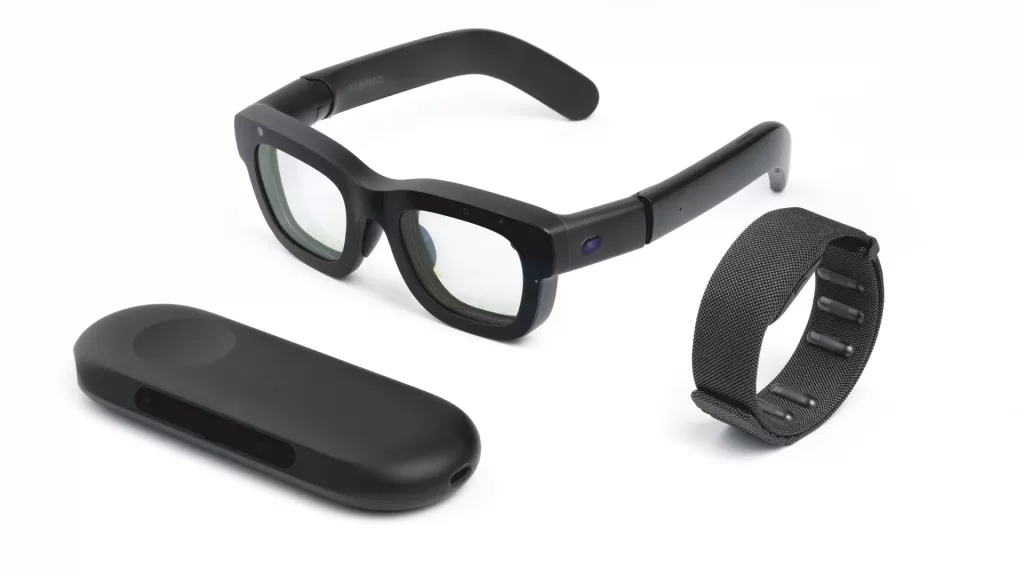
The development of advanced augmented reality (AR) devices such as Orion Meta Glasses demands materials that simultaneously satisfy stringent optical, thermal, and mechanical requirements. Silicon Carbide has emerged as a promising candidate due to its unique combination of high thermal conductivity, mechanical strength, chemical stability, and optical adaptability. This article provides a scientific overview of the rationale behind using SiC in next-generation AR systems, with emphasis on its material properties, functional advantages, and integration challenges.
1. Introduction
Augmented reality hardware is transitioning from bulky headsets to lightweight, wearable glasses. Devices like Orion Meta Glasses aim to integrate micro-displays, waveguides, sensors, and processing units within a compact form factor. This miniaturization introduces critical constraints in thermal management, optical precision, and structural durability.
Traditional materials such as glass, polymers, and silicon often fail to meet all these requirements simultaneously. As a result, advanced ceramics—particularly Silicon Carbide—are being explored as enabling materials.
2. Key Properties of Silicon Carbide
2.1 Thermal Conductivity
One of the most critical challenges in AR glasses is heat dissipation. Embedded processors, display engines, and communication modules generate localized heat that can degrade performance and user comfort.
- Thermal conductivity of SiC: ~120–270 W/m·K
- Compared to typical glass: ~1 W/m·K
This superior heat conduction allows SiC to efficiently dissipate heat, preventing thermal hotspots in compact devices like Orion Meta Glasses.
2.2 Mechanical Strength and Hardness
SiC exhibits exceptional hardness (Mohs ~9.5), second only to diamond. This makes it highly resistant to scratches, deformation, and mechanical wear.
For wearable devices:
- Increased durability in daily use
- Resistance to accidental drops and impacts
- Long-term structural stability
These characteristics are particularly valuable for consumer electronics expected to function reliably over extended periods.
2.3 Optical Properties
Although SiC is not traditionally considered a transparent optical material like fused silica, it can be engineered for specific optical functions:
- High refractive index (~2.6–2.7)
- Potential use in waveguide substrates
- Compatibility with thin-film optical coatings
In AR systems, SiC can support:
- Waveguide-based light propagation
- Optical coupling structures
- Fenêtres optiques de protection
This makes it a candidate material for integrating optical and structural functions within Orion Meta Glasses.
2.4 Chemical and Thermal Stability
SiC maintains structural and chemical integrity under:
- High temperatures (>1000°C)
- Harsh chemical environments
- Oxidation and corrosion exposure
Although AR glasses operate at much lower temperatures, this stability ensures:
- Long device lifespan
- Resistance to environmental degradation (humidity, sweat, UV exposure)
3. Functional Roles of SiC in AR Glasses
In devices like Orion Meta Glasses, SiC can serve multiple roles:
3.1 Heat Spreader Substrates
SiC can act as a thermal management layer beneath high-power components such as micro-LED displays and processors.
3.2 Structural Frames
Due to its strength-to-weight ratio, SiC-based composites can be used in load-bearing components, reducing overall device weight.
3.3 Optical Integration Platforms
SiC substrates can support integrated photonics, especially in systems where optical alignment precision is critical.
4. Comparison with Alternative Materials
| Propriété | Carbure de silicium | Glass | Aluminum | Silicium |
|---|---|---|---|---|
| Conductivité thermique | Haut | Très faible | Haut | Modéré |
| Dureté | Très élevé | Modéré | Faible | Modéré |
| Optical Tunability | Modéré | Haut | Faible | Modéré |
| Stabilité chimique | Excellent | Bon | Modéré | Bon |
This comparison highlights the multi-functional advantage of Silicon Carbide over conventional materials.
5. Manufacturing Challenges
Despite its advantages, SiC presents several engineering challenges:
5.1 Machining
SiC is extremely hard, making it difficult to cut and polish. Advanced processes such as:
- Laser machining
- Diamond grinding
- Precision dicing
are required, increasing production costs.
5.2 Cost Factors
High-purity SiC wafers and components are significantly more expensive than glass or silicon, limiting large-scale adoption.
5.3 Integration Complexity
Integrating SiC with other materials (e.g., polymers, metals, optical coatings) requires careful thermal and mechanical matching.
6. Future Outlook
With the rapid advancement of AR technologies, the demand for high-performance materials will continue to grow. Innovations in:
- Plaque de SiC fabrication
- Precision machining
- Hybrid material integration
are expected to reduce costs and improve manufacturability.
Companies developing next-generation AR devices, including Meta Platforms, are likely to further explore SiC-based solutions as they push toward lighter, more powerful, and more durable wearable systems.
7. Conclusion
Silicon Carbide offers a unique combination of thermal, mechanical, and chemical properties that make it highly suitable for advanced AR applications. In devices such as Orion Meta Glasses, these characteristics address key challenges related to heat dissipation, durability, and integration.
While manufacturing complexity and cost remain barriers, ongoing technological advancements are expected to unlock the full potential of SiC in consumer electronics. As AR continues to evolve, SiC may play a foundational role in enabling the next generation of wearable computing.