
Silicon carbide (SiC) has emerged as one of the leading representatives of third-generation semiconductors, offering significant advantages over conventional silicon in terms of wider bandgap, higher breakdown electric field, and superior thermal conductivity. These properties make SiC highly suitable for high-temperature, high-voltage, and high-frequency applications. Its exceptional physical and chemical characteristics enable the production of high-performance ceramics, protective components, bearings, heat exchange tubes, microchannel reactors, and furnace components. Furthermore, SiC, when integrated into advanced composites, can be applied in aerospace, nuclear energy, and other high-end industries, making it a cornerstone material for emerging sectors such as electric vehicles, smart grids, renewable energy, and 5G communications.
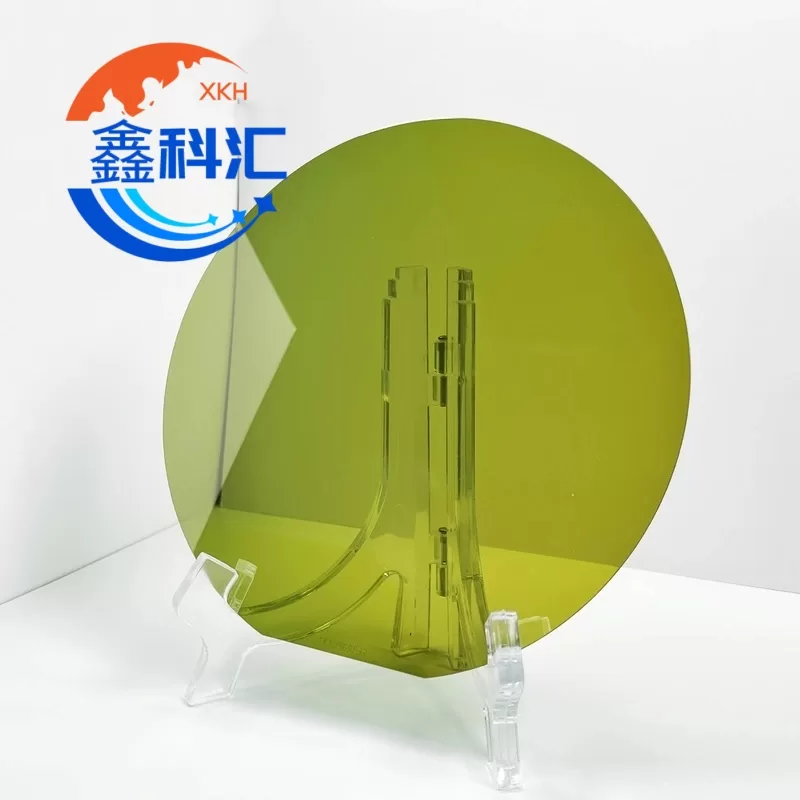
Industry Background and Market Potential
The commercialization of SiC-based power devices has accelerated in recent years, driven by the growing demand for efficient power modules in electric vehicles and photovoltaic inverters. In electric vehicles, SiC devices used in power control units (PCUs) and on-board chargers (OBCs) can reduce system weight, decrease switching losses, increase operating temperatures, and improve overall system efficiency. In photovoltaic applications, SiC devices reduce conduction and switching losses, enhancing energy conversion efficiency and extending the service life of inverters.
A key factor in cost reduction is the expansion of substrate sizes. As Wafer SiC increase from 6-inch to 8-inch diameters, the number of chips produced per wafer can increase by up to 75%, significantly lowering the unit cost. Consequently, manufacturers worldwide are actively expanding production capacities in both substrate and epitaxy segments to meet surging market demand.
Production Factors of Silicon Carbide
1. Raw Materials
The synthesis of SiC relies on high-purity silica (>98.5% SiO₂) and carbon sources such as petroleum coke, low-ash anthracite, and other high-purity carbons. Minor additives like wood chips and salts are also used. High-temperature single-crystal growth requires specialized graphite materials for crucibles and insulation, typically of ultra-high purity (<5 ppm). Although domestic supply chains have improved, some high-performance materials remain reliant on imports.
2. Processing Technology
Single-crystal growth represents the most critical and technically challenging step in SiC production. The main methods include Physical Vapor Transport (PVT), High-Temperature Chemical Vapor Deposition (HT-CVD), and Liquid Phase Epitaxy (LPE). Among these, PVT is favored for industrial production due to its simpler equipment requirements, lower operational costs, and ease of control.
The PVT growth process involves placing high-purity SiC powder in a graphite crucible and seeding the crystal inside the lid. The crucible is heated to above 2000°C, creating a temperature gradient that drives vapor transport of SiC species from the powder to the seed crystal. Over time, the seed grows into a single-crystal boule suitable for slicing into wafers.
In epitaxy, Chemical Vapor Deposition (CVD) is the most widely used method for producing high-quality 4H-SiC thin films. CVD allows precise control over layer thickness, doping concentration, and doping type while maintaining process stability and reasonable cost, making it the preferred technology for commercial SiC wafers. Other methods, such as Molecular Beam Epitaxy (MBE), Liquid Phase Epitaxy (LPE), Pulsed Laser Deposition (PLD), and sublimation, are also employed for specialized applications.
3. Equipment Considerations
Single-crystal furnaces and epitaxy reactors are the backbone of the SiC industry. Domestic manufacturers have increasingly achieved high levels of equipment localization, with leading suppliers covering the majority of the market. Continuous improvements in furnace design, temperature control, and automation are critical to enhancing crystal quality and yield. Equipment and process optimization remain major factors in reducing production costs and improving competitiveness.
4. Cost Structure
SiC substrates account for nearly half of the total cost of power devices, while the epitaxy layer contributes roughly 25%. This contrasts sharply with silicon-based devices, where wafers only represent about 7% of device cost. High substrate costs limit downstream adoption, making efficiency improvements in crystal growth, yield enhancement, cutting loss reduction, and localized supply chain development essential to achieving cost competitiveness.
Capacity and Regional Cost Analysis
Domestic SiC substrate and epitaxy producers have rapidly expanded production in recent years, though overall capacity remains concentrated among a few leading players. Electricity and labor costs vary significantly across regions, impacting optimal production locations. Single-crystal growth consumes considerable energy, including furnace operation, facility utilities, and climate control, making energy management a key factor in operational efficiency. Similarly, workforce costs, including skilled operators and technicians, contribute substantially to total production expenditure.
Industry Chain Coordination and Future Trends
The SiC industry chain is not yet fully closed-loop, with upstream material yield, process stability, and downstream device adoption closely interlinked. Future development requires coordinated efforts across the value chain: upstream material suppliers must improve quality and capacity, midstream equipment manufacturers should reduce costs and enhance localization, and downstream device makers must accelerate market adoption.
As the demand for efficient power devices in electric vehicles, photovoltaic inverters, and smart grids continues to grow, the SiC industry is poised for high-quality expansion. Optimizing production efficiency, lowering costs, and advancing technology will remain key drivers for large-scale industrialization and global competitiveness.