
Sapphire glass is everywhere. From luxury watch faces to the latest flagship smartphones, it’s the invisible shield that protects our most precious gadgets. But have you ever paused to wonder how this seemingly magical material is actually made? The story of sapphire glass is a tale of extreme heat, patience, and a little bit of scientific wizardry.
1. The Birth of a Crystal
At its core, sapphire glass is not “glass” in the traditional sense—it’s a single crystal of aluminum oxide (Al₂O₃). Unlike regular glass, which is an amorphous solid, sapphire is a crystalline material, giving it remarkable hardness (9 on the Mohs scale) and optical clarity.
The journey begins with pure aluminum oxide powder. Scientists melt this powder at a scorching temperature of about 2,050°C (3,722°F). At these temperatures, the powder liquefies and becomes ready for its next phase: crystallization.
2. Growing the Crystal: The Czochralski Method
One of the most common ways to grow sapphire crystals is the Czochralski method—a process as delicate as it is dramatic. A tiny “seed” crystal is dipped into the molten aluminum oxide and slowly pulled upward while being rotated. This slow, patient dance allows the liquid to solidify around the seed, layer by layer, forming a cylindrical sapphire crystal known as a “boule.”
The process is painstakingly slow. Pull too fast, and the crystal fractures; too slow, and the process becomes economically unfeasible. The result, when done correctly, is a flawless, gem-quality sapphire cylinder, sometimes as long as a meter.
3. Shaping and Polishing: From Boule to Glass
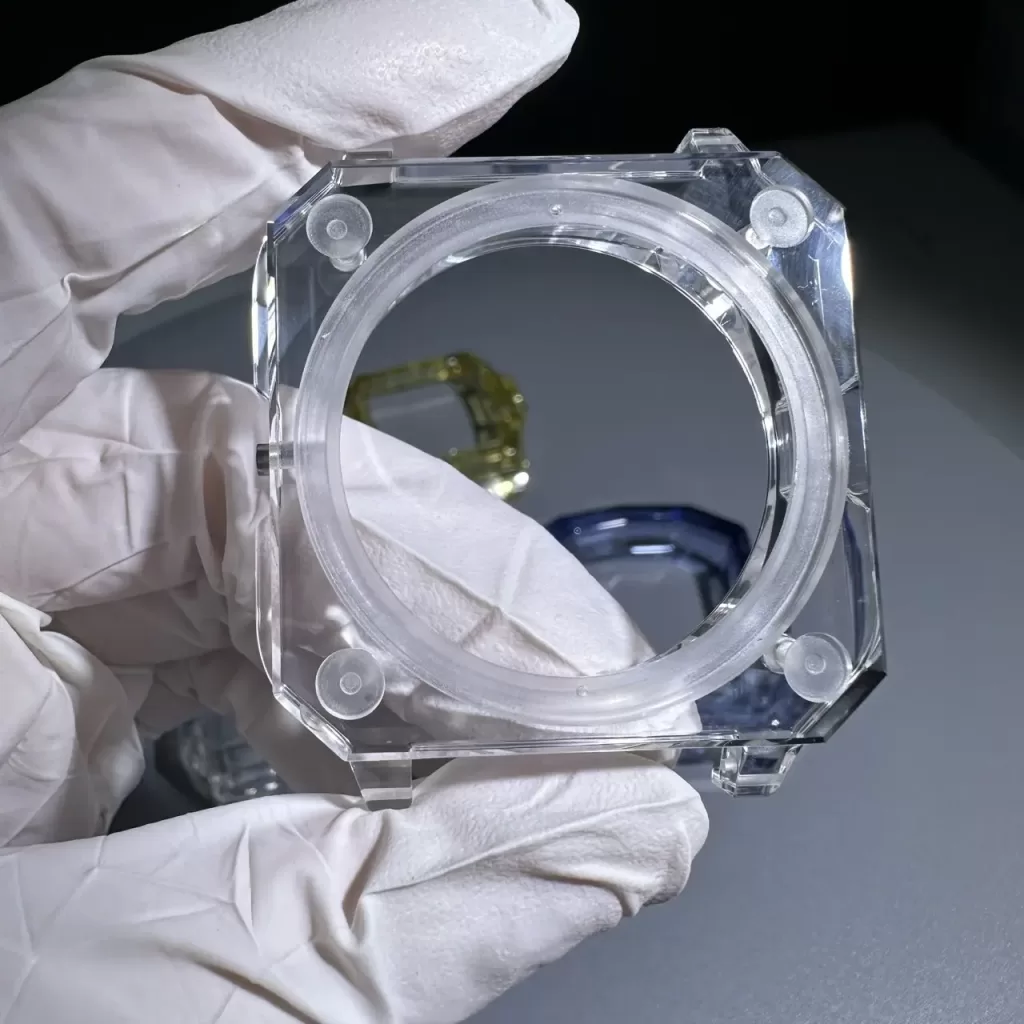
Once the boule is ready, it’s sliced into wafers or sheets using diamond-coated saws. These slices are then meticulously ground, lapped, and polished to achieve the transparent, ultra-smooth surface we recognize as sapphire glass. Any imperfection can compromise both optical clarity and strength, so every piece undergoes rigorous inspection.
Interestingly, the polishing process often requires diamond slurry—a material even harder than sapphire itself—to achieve the perfect finish. This is why sapphire glass isn’t just durable; it’s also a triumph of precision engineering.
4. Coatings and Treatments
While sapphire glass is naturally scratch-resistant, additional coatings can improve performance. Anti-reflective coatings, for instance, enhance visibility under bright sunlight, while oleophobic coatings help resist fingerprints. These final touches elevate sapphire from a raw crystal into a premium, functional material.
5. Why It Matters
Sapphire glass is more than just a protective shield. Its creation embodies the intersection of art, science, and engineering. Each sheet is a testament to human ingenuity—a material forged in fire, shaped with care, and polished to perfection, ready to withstand the scratches and scuffs of everyday life.
So next time you glance at your watch or smartphone, remember: what looks like a simple piece of glass is actually a marvel of crystalline engineering, born from molten rock and painstaking craftsmanship.