
Silicon carbide (SiC) has emerged as a superstar in the world of semiconductors. Renowned for its exceptional thermal conductivity, high breakdown voltage, and chemical stability, SiC powers everything from electric vehicles and renewable energy inverters to aerospace electronics. Yet, the journey from raw SiC wafers to high-performance devices is anything but simple. At the heart of this journey lie three interwoven challenges: controlling epitaxial layer thickness, achieving precise doping, and minimizing defects. Understanding these challenges is crucial for both researchers and industry players who aim to push the boundaries of high-power electronics.
The Thickness Challenge: More Than Meets the Eye
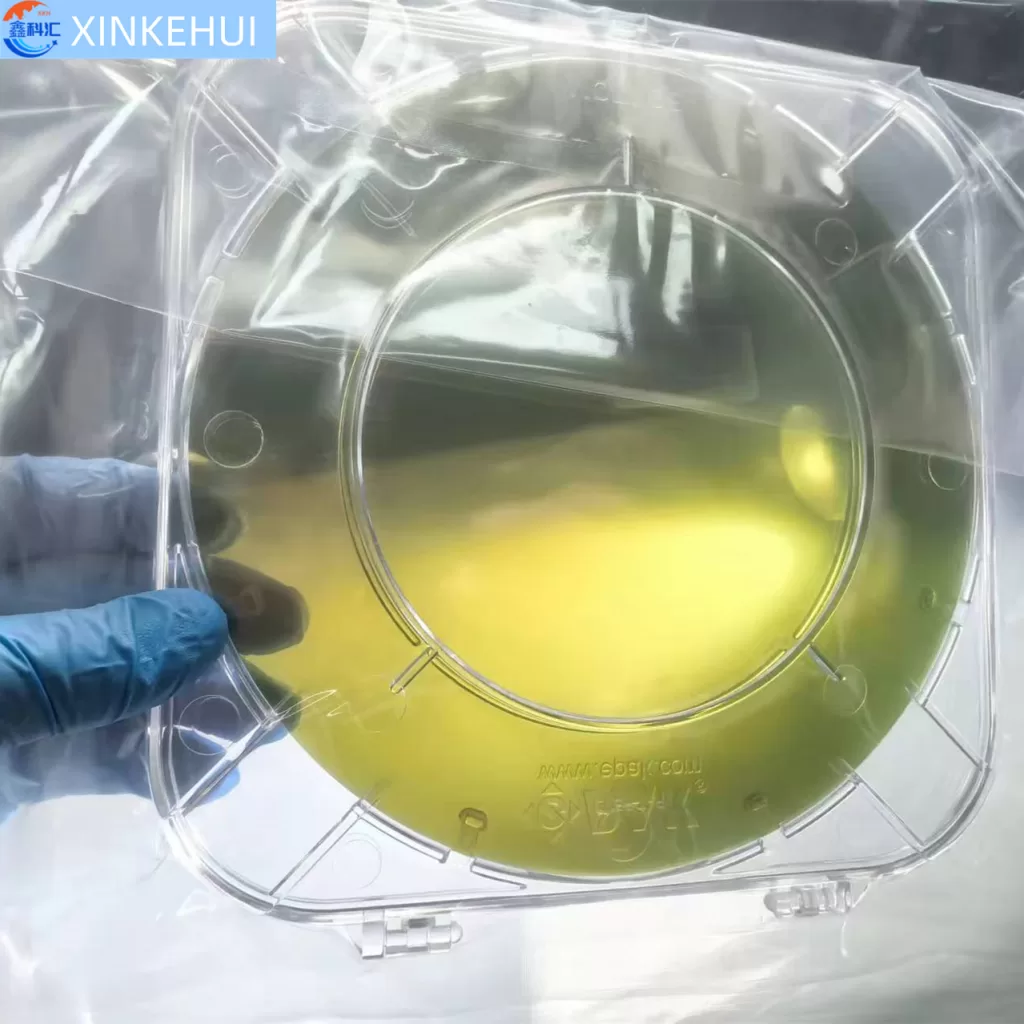
In epitaxial growth, controlling layer thickness is deceptively difficult. SiC’s complex crystal lattice makes uniform deposition over large wafers a technical tightrope. Too thin a layer may fail to insulate or conduct as required, while overly thick layers introduce stress, cracking, or wafer bowing. Modern fabrication relies on chemical vapor deposition (CVD) under ultra-stable conditions. In-situ monitoring techniques, including real-time reflectometry and optical interferometry, now allow engineers to track growth with nanometer precision. Achieving uniform thickness across 150 mm or 200 mm wafers is no longer a dream—it is a critical industrial reality.
Doping: Sculpting Electrical Properties at the Atomic Level
Doping transforms SiC from a mere crystal into a functional semiconductor. Nitrogen, aluminum, or boron atoms are introduced to modify conductivity. But in SiC, dopants diffuse slowly due to its dense lattice, making uniform distribution a delicate process. Overdoping or uneven doping can cause performance inconsistencies, while underdoping leaves the device electrically underpowered. Solutions involve ion implantation, careful post-growth annealing, and precisely controlled gas flows during CVD. Today, researchers can achieve doping uniformity with deviations of less than a few percent—a feat unimaginable a decade ago.
Defects: The Silent Performance Killers
Defects are the invisible saboteurs of SiC epitaxy. Microscopic imperfections like stacking faults, dislocations, and micropipes can compromise device reliability and lifetime. Each defect acts as a potential failure point in high-voltage or high-temperature applications. Minimizing defects requires a combination of high-purity gas environments, optimized substrate surface preparation, and meticulous control of growth parameters. Advances in epitaxial growth techniques and substrate patterning have drastically reduced defect densities, enabling SiC devices to handle extreme conditions with unprecedented reliability.
Why This Matters
These challenges—thickness, doping, and defects—are not abstract academic concerns; they directly impact the performance of real-world devices. Electric vehicle inverters, solar power converters, and aerospace electronics all rely on SiC’s ability to operate efficiently under extreme conditions. Improving epitaxial quality translates into smaller, lighter, and more reliable devices. It also paves the way for higher switching frequencies, lower energy losses, and longer lifespans, making SiC indispensable for future electronics.
Future Directions: Toward Atomic-Scale Control
The frontier of SiC epitaxy is evolving rapidly. Techniques like machine learning-assisted process optimization, atomic-level substrate engineering, そして in-situ nanoscale diagnostics promise to push the boundaries even further. By addressing thickness, doping, and defect challenges simultaneously, engineers are not just growing crystals—they are designing the next generation of high-performance electronics from the ground up.
In summary, the triad of thickness, doping, and defects defines the SiC epitaxy challenge. Overcoming these hurdles is a testament to human ingenuity, bridging fundamental science and industrial application. For those seeking the future of high-power electronics, mastering these three pillars is not optional—it is essential.