
Silicon carbide (SiC) is a high-performance ceramic widely used in semiconductor manufacturing, energy systems, and advanced industrial applications. Although all SiC materials share the same chemical composition, their processing routes lead to fundamentally different microstructures and properties.
Among the various forms, CVD Silicon Carbide (CVD SiC) and Sintered Silicon Carbide represent two distinct material systems. This article provides a systematic comparison from the perspectives of fabrication methods, microstructure, properties, and applications.
1. Fabrication Methods: The Origin of Material Differences
1.1 CVD Silicon Carbide

CVD SiC is produced using Chemical Vapor Deposition, in which gaseous precursors decompose at elevated temperatures and deposit SiC layer-by-layer onto a substrate.
Key characteristics:
- Atomic- or molecular-level deposition
- Layer-by-layer growth mechanism
- No traditional sintering stage
1.2 Sintered Silicon Carbide
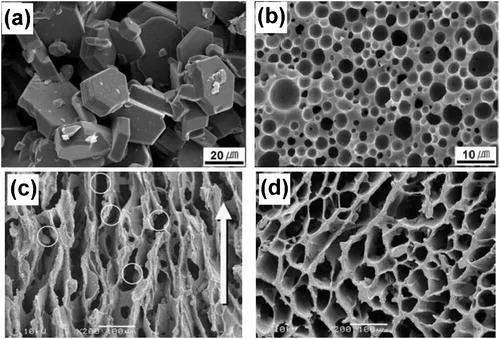
Sintered SiC is manufactured by compacting SiC powders followed by high-temperature densification. Common variants include:
- Pressureless sintered SiC (SSiC)
- Reaction-bonded SiC (RB-SiC)
Key characteristics:
- Powder-based processing
- Grain growth and diffusion during sintering
- Often contains sintering additives or residual phases
2. Microstructural Differences: Density and Defect Distribution
Microstructure plays a decisive role in determining material performance.
2.1 CVD Silicon Carbide
- Nearly fully dense (approaching theoretical density)
- Minimal grain boundary impurities
- Extremely low porosity (near-zero)
Implications:
- Ultra-high purity
- Very low particle generation
2.2 Sintered Silicon Carbide
- Presence of grain boundaries
- Possible residual silicon or additives
- Micro-porosity (especially in RB-SiC)
Implications:
- Slightly lower structural uniformity
- Potential particle release under extreme conditions
3. Property Comparison: Key Engineering Metrics
3.1 Purity and Cleanliness
- CVD SiC:
- Extremely high purity (close to theoretical limits)
- Suitable for ultra-clean environments
- Sintered SiC:
- Contains minor impurities or additives
- Suitable for general industrial use
3.2 Corrosion and Plasma Resistance

- CVD SiC:
- Excellent resistance to plasma, especially fluorine-based chemistries
- Stable surface with minimal erosion
- Sintered SiC:
- Grain boundaries can act as corrosion initiation sites
- More susceptible to long-term degradation
3.3 Thermal Properties
Both materials exhibit strong thermal performance, but differences exist:
- CVD SiC:
- Stable thermal conductivity
- Uniform thermal expansion
- Sintered SiC:
- Good thermal properties, but influenced by microstructure
3.4 Mechanical Properties
- Sintered SiC:
- Generally higher fracture toughness
- Suitable for load-bearing applications
- CVD SiC:
- More brittle but structurally uniform
4. Application Differences
4.1 Typical Applications of CVD Silicon Carbide
- Plasma etching components (focus rings, chamber liners)
- Rapid thermal processing (RTP) parts
- Epitaxy system components
Key requirement:
Ultra-clean, plasma-resistant, and contamination-free materials
4.2 Typical Applications of Sintered Silicon Carbide
- Mechanical seals
- Bearings and wear-resistant components
- Kiln furniture and heat exchangers
Key requirement:
Mechanical strength, wear resistance, and corrosion resistance
5. Conclusion: Fundamental Differences
The essential distinction can be summarized as follows:
👉 CVD SiC is a high-purity functional material, while sintered SiC is a structural engineering material.
| Aspect | CVD SiC | Sintered SiC |
|---|---|---|
| Fabrication | Vapor deposition | Powder sintering |
| Purity | Ultra-high | Matig |
| Porosity | Near-zero | Present |
| Plasma resistance | Uitstekend | Matig |
| Typisch gebruik | Semiconductor equipment | Industrial components |
6. Final Remarks
As advanced manufacturing technologies continue to evolve, the demand for ultra-clean and high-performance materials has increased significantly. CVD SiC plays a critical role in semiconductor processing, while sintered SiC remains indispensable in traditional industrial applications.
Rather than competing, these two materials complement each other across different engineering environments, each optimized for specific performance requirements.