
1. Introduction
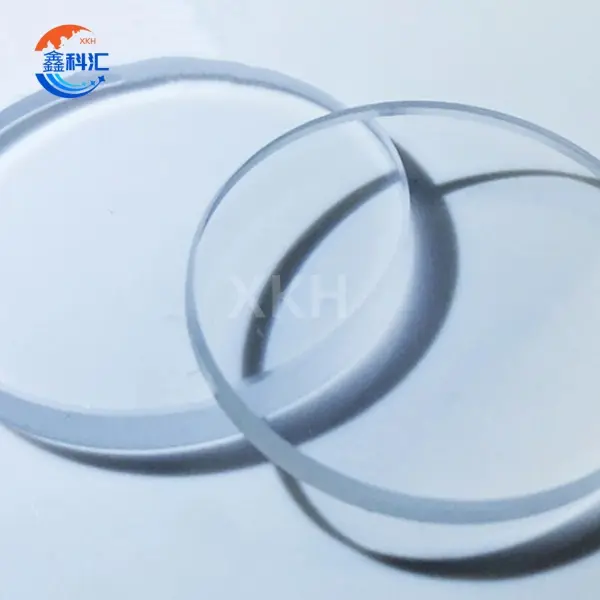
Optical windows are critical components in systems where electromagnetic radiation must pass between environments without distortion or degradation. They are widely used in laser systems, infrared imaging, aerospace sensors, semiconductor equipment, and high-pressure environments. The choice of material directly affects optical transmission, thermal stability, mechanical durability, and system lifetime.
This article provides a scientific comparison of major optical window materials, focusing on sapphire, quartz (fused silica), and BK7 glass, which together represent the most widely used categories in industrial and research applications.
2. Fundamental Selection Criteria
When selecting an optical window material, engineers typically evaluate the following parameters:
Optical Properties
- Transmission range (UV–Visible–IR)
- Refractive index (n)
- Absorption coefficient
- Birefringence
Thermal Properties
- Thermal conductivity
- Coefficient of thermal expansion (CTE)
- Resistance to thermal shock
Mechanical Properties
- Hardness (Mohs scale)
- Young’s modulus
- Fracture toughness
Chemical Stability
- Corrosion resistance
- Moisture resistance
- Compatibility with harsh environments (e.g., plasma, acids)
3. Comparative Analysis of Key Materials
3.1 Sapphire (Al₂O₃)
Sapphire is a single-crystal material known for its exceptional hardness and wide optical transmission range.
Key Properties:
- Transmission: ~0.15 µm to 5.5 µm
- Refractive Index: ~1.76
- Hardness: Mohs 9
- Thermal Conductivity: ~25–40 W/m·K
Advantages:
- Outstanding scratch resistance and durability
- High-temperature stability (>1500°C)
- Excellent IR transmission
Limitations:
- Higher cost due to crystal growth and machining
- Birefringence may affect polarization-sensitive systems
Applications:
- Infrared (IR) windows and domes
- Aerospace and defense sensors
- High-pressure and abrasive environments
3.2 Fused Quartz (Fused Silica)
Fused silica is an amorphous form of silicon dioxide (SiO₂), widely used for its excellent UV transparency and thermal stability.
Key Properties:
- Transmission: ~0.18 µm to 3.5 µm
- Refractive Index: ~1.46
- Thermal Expansion: extremely low (~0.5 × 10⁻⁶ /K)
Advantages:
- Superior UV transmission
- Excellent resistance to thermal shock
- Low birefringence (ideal for precision optics)
Limitations:
- Lower hardness than sapphire
- Limited IR transmission beyond ~3.5 µm
Applications:
- UV laser systems
- Semiconductor lithography
- Optical measurement instruments
3.3 BK7 Optical Glass
BK7 is a borosilicate crown glass and one of the most commonly used materials in optical systems.
Key Properties:
- Transmission: ~0.35 µm to 2.0 µm
- Refractive Index: ~1.52
- Density: ~2.51 g/cm³
Advantages:
- Cost-effective and widely available
- Good optical homogeneity
- Easy to fabricate and polish
Limitations:
- Poor UV and IR performance compared to quartz and sapphire
- Lower thermal and mechanical resistance
Applications:
- General-purpose optics
- Imaging systems
- Low-power laser applications
4. Material Comparison Table
| Property | Sapphire | Fused Quartz | BK7 Glass |
|---|---|---|---|
| Transmission Range | 0.15–5.5 µm | 0.18–3.5 µm | 0.35–2.0 µm |
| Refractive Index | ~1.76 | ~1.46 | ~1.52 |
| Hardness (Mohs) | 9 | ~5.5–6 | ~5 |
| Thermal Conductivity | High | Low | Moderate |
| Thermal Expansion | Moderate | Very Low | Moderate |
| Cost | High | Medium | Low |
| Typical Use | IR, harsh env. | UV, precision | General optics |
5. Application-Oriented Material Selection
Aerospace & Defense
- Preferred: Sapphire
- Reason: durability, pressure resistance, IR capability
Semiconductor & UV Optics
- Preferred: Fused Quartz
- Reason: UV transparency, thermal stability
Commercial Optical Systems
- Preferred: BK7
- Reason: cost-performance balance
6. Emerging Trends in Optical Window Materials
- Large-diameter sapphire windows (8-inch to 12-inch scale)
- Advanced coatings (AR, IR-cut, anti-reflective multilayers)
- Hybrid materials combining mechanical strength and optical precision
- Increasing demand from AI data centers, LiDAR, and AR/VR optics
7. Conclusion
The selection of optical window materials is inherently application-driven. While sapphire excels in extreme environments, fused quartz dominates UV and precision optics, and BK7 remains the industry standard for cost-sensitive applications.
A systematic evaluation of optical, thermal, and mechanical parameters, combined with application-specific constraints, is essential for optimal material selection in advanced optical systems.