
Silicon carbide (SiC), especially the 4H‑SiC polytype, plays a foundational role in high‑power and high‑frequency semiconductor devices due to its excellent electrical, thermal, and mechanical properties. However, achieving high‑quality SiC epitaxial layers remains a complex technological challenge that directly impacts device yield, performance, and reliability. This article synthesizes verified research insights and industry practices to clarify the main hurdles in SiC epitaxy and actionable methods to address them.
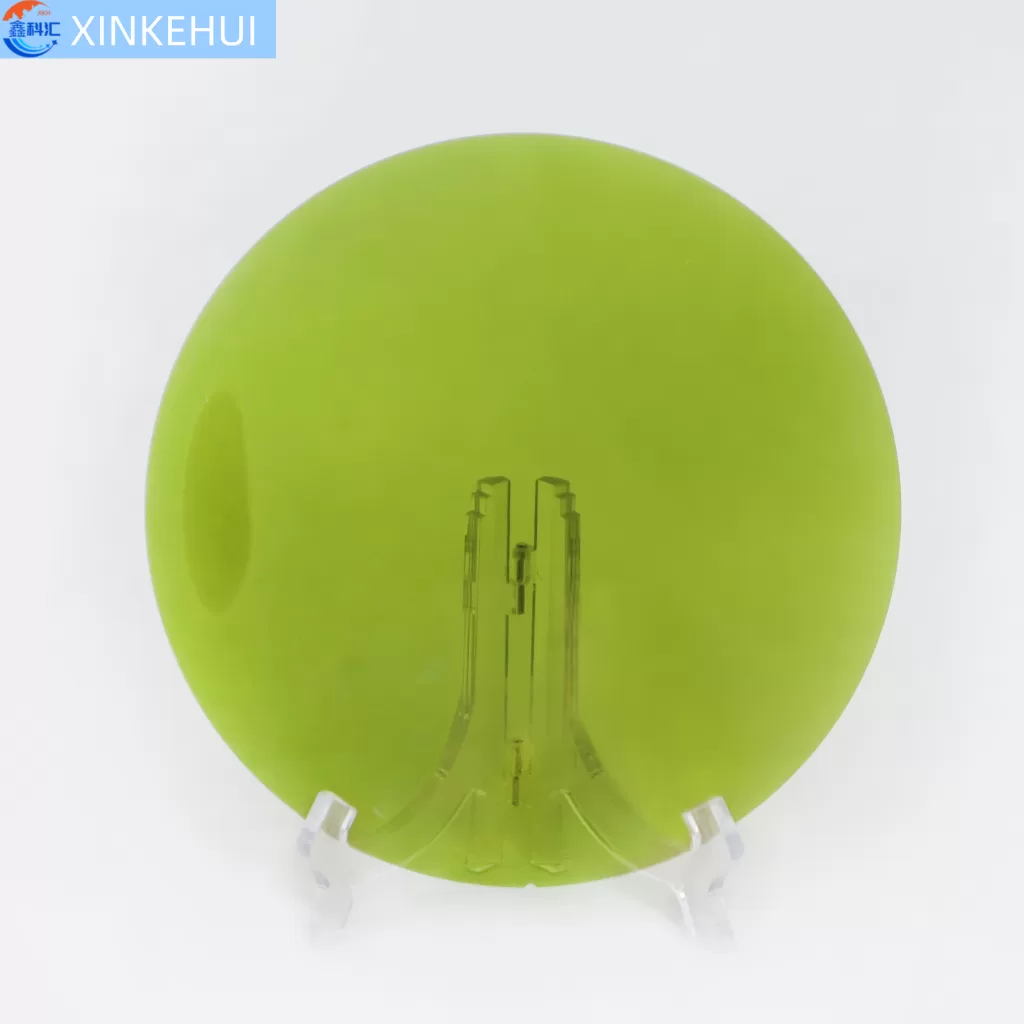
1. Defect Propagation: Substrate and Process Origins
Challenge:
Defects such as basal plane dislocations (BPDs), stacking faults, micropipes, triangular and carrot defects can originate from the substrate or form during the epitaxial process. These defects degrade electrical properties, reduce breakdown voltage, and limit device performance.
Key Solutions:
- Pre‑growth Surface Preparation: Clean and planarize the substrate surface using chemical cleaning and chemical‑mechanical polishing (CMP) to remove contaminants and reduce surface irregularities that act as defect nucleation sites.
- Buffer Layers: Introduce a thin buffer layer between the substrate and main epitaxial layer to suppress propagation of substrate defects into the epitaxial film. Controlled buffer layers help relieve lattice and dopant mismatch stress.
- In‑situ Monitoring: Use real‑time process monitoring (e.g., Reflection High‑Energy Electron Diffraction – RHEED) to detect defect formation during growth and adjust parameters dynamically.
2. Thickness and Doping Uniformity Control
Challenge:
Uniform thickness and dopant distribution across large wafers are critical for device consistency, especially as the industry transitions from 150 mm to 200 mm substrates. Variations of a few percent can skew electric field profiles and device characteristics.
Key Solutions:
- Precise CVD Parameter Control: Carefully regulate temperature, precursor flow rates, and chamber pressure. Such controls are fundamental for uniform growth and predictable doping profiles throughout the wafer.
- Optimized C/Si Ratio: Adjust the carbon‑to‑silicon ratio in the gas phase to balance surface kinetics and dopant incorporation. Small adjustments can significantly improve thickness and doping uniformity.
- Advanced Reactor Design: Use reactor systems with superior gas flow uniformity and thermal distribution (e.g., hot‑wall or near‑hot‑wall CVD with planetary rotation) to maintain consistent growth conditions across the wafer.
3. Surface Morphology and Step Bunching
Challenge:
Surface roughness, step bunching, and irregular step terraces degrade epitaxial surface quality and complicate subsequent device fabrication steps. Step bunching is influenced by substrate miscut angle and growth environment.
Key Solutions:
- Substrate Off‑Angle: Use off‑axis substrates (e.g., ~4° off <0001>) to promote controlled step‑flow growth and reduce morphological instabilities.
- C/Si Optimization: Target an optimal C/Si ratio to reduce excessive step formation and achieve smoother surfaces with fewer morphological defects.
- Pre‑growth Hydrogen Etching: Controlled hydrogen etching removes surface damage and reveals atomic steps, improving step‑flow growth, but must be precisely timed to avoid exposing subsurface defects.
4. High‑Temperature Process Stability
Challenge:
Epitaxia de SiC requires high temperatures (typically 1500–1700 °C), making it difficult to maintain uniform temperature distribution across larger wafers. Temperature gradients can trigger polytype variations and impurity incorporation.
Key Solutions:
- Axial and Radial Temperature Control: Engineering axial and radial gradients in the reactor allows stable crystal growth and reduces unwanted polytype transitions.
- Temperature‑Controlled Cooling: Gentle and controlled cooldown reduces thermal stress and wafer bowing, minimizing mechanical strain that can create defects.
5. Impurity Management and Gas Phase Chemistry
Challenge:
Impurities from precursor gases and uncontrolled chemical kinetics can lead to unwanted dopant incorporation or phase anomalies in the epitaxial layer.
Key Solutions:
- High‑Purity Precursors: Use ultra‑high‑purity gases and maintain clean reactor environments to minimize contamination.
- Gas Flow Optimization: Fine‑tune flow rates and pressure to optimize chemical reactions at the substrate surface, reducing unintentional doping or droplet formation.
Resumo
SiC epitaxial growth stands at the intersection of material science and precision process engineering. The challenges of defect control, uniformity, surface morphology, thermal stability, and gas chemistry are interconnected and demand meticulous optimization of both equipment and process parameters. By combining advanced reactor technology, substrate preparation methods, real‑time monitoring, and process controls grounded in research and industrial practice, high‑quality SiC epitaxial layers can be reliably achieved—bringing us closer to the full promise of wide‑bandgap semiconductor devices.