
In recent years, the global semiconductor supply chain has been undergoing a major structural shift. Manufacturing, assembly, and many upstream segments continue to move toward mainland China. By 2025, driven by expanding advanced process demand, regional supply chain restructuring, and changing global policy environments, mainland China has become one of the fastest-growing semiconductor manufacturing hubs worldwide.
This relocation not only accelerates the expansion of wafer fabrication capacity but also significantly boosts the development of upstream materials, raising the demand for localized semiconductor material supply.
Materials and Equipment: Core Drivers of Semiconductor Innovation
In the semiconductor industry, materials and equipment form the essential foundation of chip production. Every wafer fabrication and packaging process relies on dedicated materials whose performance directly influences device yield, reliability, and cost.
Semiconductor materials typically have the following characteristics:
- High technological barriers
- Long customer qualification cycles
- Close supply chain collaboration
- High market concentration
- Rapid product iteration
- Strong dependence on long-term stability and purity
For many years, high-end materials have been largely dominated by overseas suppliers. However, from 2023 to 2025, with domestic fabs expanding capacity, material localization is progressing rapidly.
2025 Global Semiconductor Materials Market Outlook
Industry forecasts indicate that the global semiconductor materials market will exceed USD 60 billion in 2025, showing a stable recovery trend.
Wafer fabrication materials remain the primary segment, accounting for around 60% of the total market, while packaging materials continue to grow steadily thanks to advanced packaging and high-performance computing.
2025 Regional Demand Highlights
- Taiwan remains the world’s largest semiconductor materials market.
- Mainland China is expected to account for 20–25% of global materials demand, continuing strong year-on-year growth.
- South Korea maintains significant demand, particularly in memory-related materials.
Mainland China’s expanding wafer fabrication capacity is one of the major global drivers for materials demand growth.
Wafer Fabrication Materials: Market Structure in 2025
Wafer manufacturing involves extensive material categories. In 2025, the structural distribution of wafer fabrication materials is estimated as follows:
- Silicon wafers and silicon-based materials: ~30%
- Photomasks: ~14%
- Electronic specialty gases: ~14%
- Photoresists and related chemicals: ~12%
- CMP slurries and pads: ~7%
- Sputtering targets: ~3%
- Other materials: ~13%
Although third-generation semiconductor materials such as SiC and GaN are growing rapidly, silicon remains the dominant material due to its mature supply chain and comprehensive processing ecosystem.
Silicon Wafers: Moving Toward Larger Dimensions
Silicon wafers remain the fundamental substrate for the majority of semiconductor devices.
Mainstream wafer sizes in 2025 continue to be 200 mm (8-inch) e 300 mm (12-inch).
The industry trend toward larger wafers remains clear, as larger diameters enable more chips per wafer and reduced cost per device.
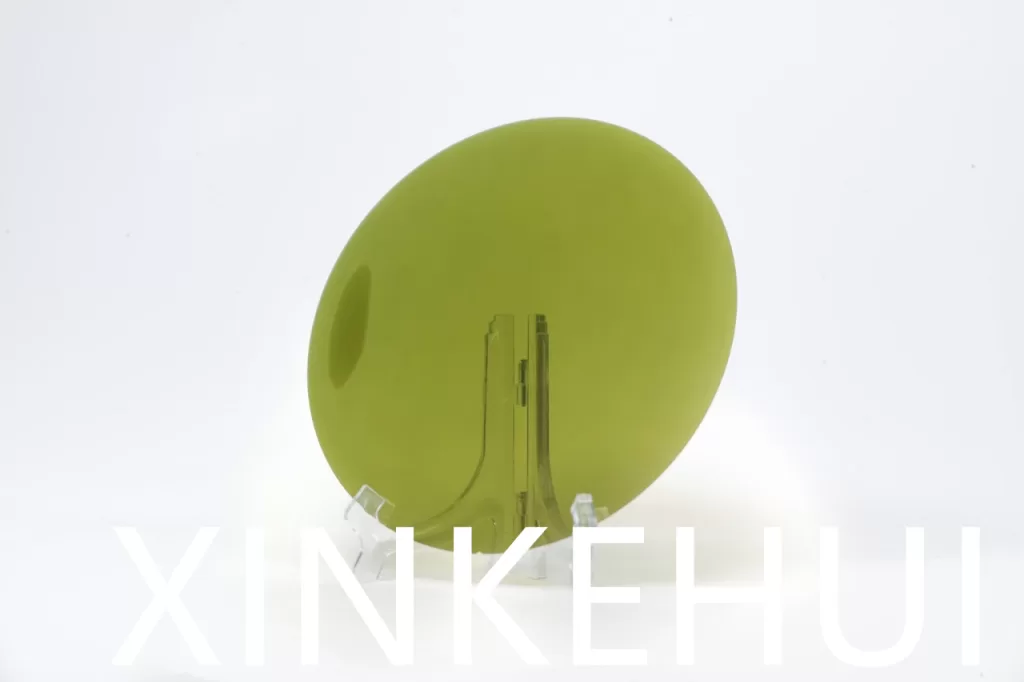
As advanced process technologies tighten requirements on uniformity and defect levels, wafer quality becomes a critical competitive factor for fabs.
Packaging Materials: Supported by Advanced Packaging Trends
The packaging materials market shows stable growth in 2025, supported by chiplet architectures, high-performance computing, and increased power device demand. The general market structure is as follows:
- Substrates: ~40%
- Lead frames: ~15%
- Bonding wires: ~15%
- Encapsulation materials: ~13%
- Ceramic substrates: ~10–12%
- Die-attach materials: ~4%
The growing complexity of packaging technologies raises performance requirements for all material categories.
Front-End Materials Growing Faster Than Back-End Materials
By 2025, front-end wafer fabrication materials show significantly higher growth rates compared with back-end packaging materials.
This trend is driven by:
- Expanded adoption of EUV lithography
- Increased use of ALD and PECVD thin-film processes
- Higher layer counts in copper interconnect structures
- Demand for superior purity and process stability
Front-end materials are becoming a strategic priority for global supply chain localization.
China’s Rising Position and the Window for Material Localization
With wafer fabrication capacity steadily shifting to mainland China, domestic materials suppliers face both challenges and opportunities.
Desafios
- High technical barriers in advanced materials
- Lengthy qualification and validation cycles
- Compatibility requirements across different process nodes and equipment
Opportunities
- Strong demand from large-scale fab expansions
- Increasing resilience requirements in regional supply chains
- Material localization shifting from “optional” to “essential”
Over the next three to five years, mainland China is expected to be the world’s fastest-growing semiconductor materials market, with the largest potential for domestic substitution.
Conclusão
The year 2025 marks a critical stage in the global semiconductor supply chain restructuring.
As wafer fabrication continues to expand, and advanced material technologies rapidly evolve, upstream semiconductor materials are entering a period of accelerated growth.
From high-purity silicon wafers to third-generation semiconductor substrates, photoresists, specialty gases, and CMP materials, the demand for high-performance materials is steadily rising.
Material suppliers will play an increasingly important role in supporting the global semiconductor industry’s next phase of innovation and development.