
Silicon carbide (SiC) is a material that has rapidly moved from laboratories into electric vehicles, renewable energy systems, and high-performance electronics. Its popularity does not come from its chemical simplicity—just silicon and carbon—but from the remarkable way these atoms arrange themselves. The structure of silicon carbide is the source of its strength, stability, and exceptional electrical behavior.
Silicon Carbide: A Simple Formula With Complex Possibilities
At the most basic level, silicon carbide is a binary compound where each silicon atom bonds strongly with a carbon atom. But unlike many other semiconductors, SiC does not settle for a single crystal form. It exists in more than 200 polytypes, each created by a different stacking sequence of atomic layers. Even though the chemistry stays the same, variations in structure produce different bandgaps, electron mobility, and thermal properties.
This structural diversity is one of the main reasons SiC has become a foundation for next-generation power electronics.
The Most Important Polytypes: 4H-SiC and 6H-SiC
Among all the known polytypes, two stand out in commercial applications: 4H-SiC e 6H-SiC. Both belong to the hexagonal crystal family, but their stacking orders differ slightly. These subtle variations, invisible to the eye, create noticeable differences in performance.
4H-SiC is widely used in MOSFETs, Schottky diodes, and high-voltage modules because it offers a wide bandgap, high breakdown field, and excellent thermal conductivity. This combination makes it ideal for fast-switching and efficient power conversion.
6H-SiC, on the other hand, is still used in some RF and microwave applications. Its structure gives it unique electronic characteristics that are suitable for niche but demanding environments.
Why the Crystal Structure Matters
The arrangement of atoms in silicon carbide directly determines how the material behaves. A strong covalent bond network gives SiC exceptional hardness and thermal stability. Its wide bandgap supports high-temperature and high-voltage operation. The uniform arrangement of silicon and carbon atoms reduces electron scattering, enabling efficient current flow even under extreme conditions.
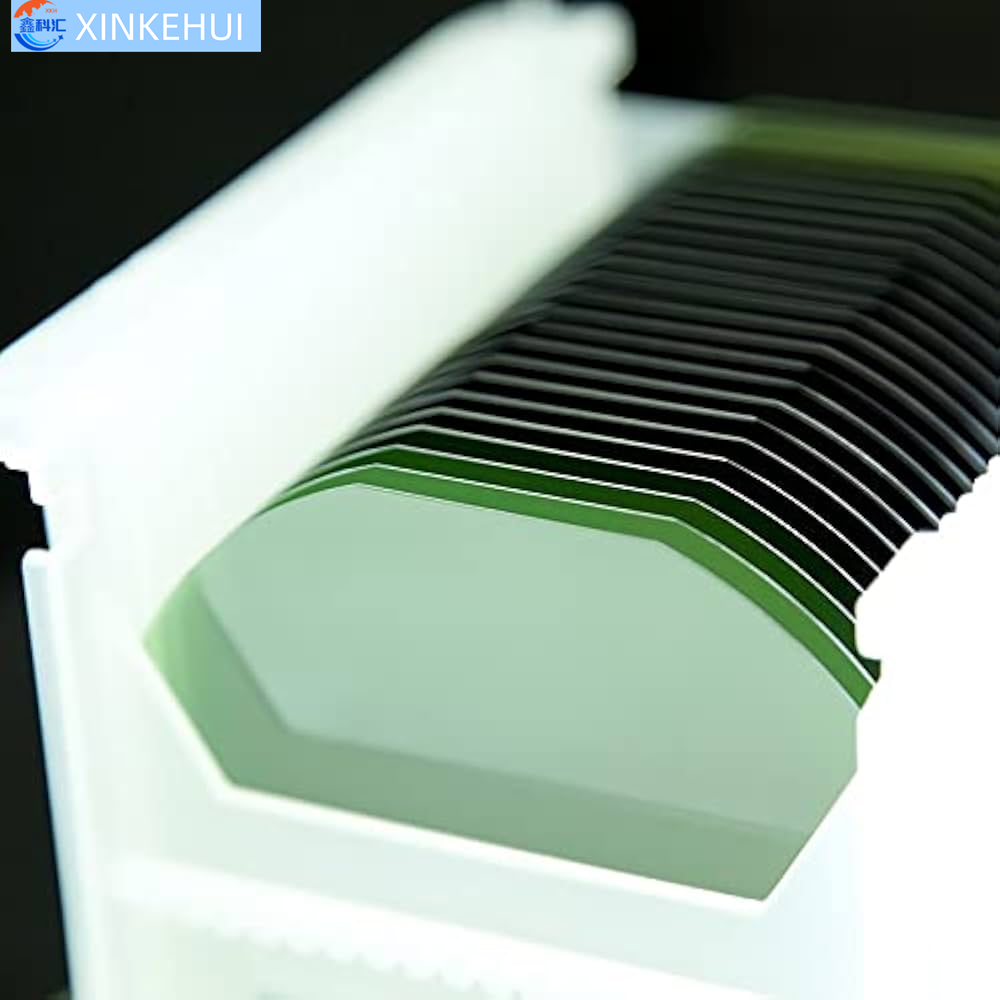
These advantages explain why SiC wafers and substrates have become essential for device manufacturers who need reliability and efficiency in harsh environments.
From Crystal Structure to Real-World Impact
The structure of silicon carbide is more than an academic detail. It is the reason why electric vehicles can charge faster, why solar inverters reach higher efficiency, and why next-generation energy systems can operate at higher temperatures without sacrificing performance. As demand for clean energy and efficient power conversion continues to rise, SiC is expected to play an even larger role.
Understanding the structure of silicon carbide helps us appreciate how a simple combination of silicon and carbon can unlock powerful technological advances. The future of high-performance electronics is being shaped—quite literally—one atomic layer at a time.