
Silicon carbide (SiC) wafers have become a cornerstone material in power electronics, automotive, and high-frequency applications due to their superior breakdown electric field, thermal conductivity, and high-temperature performance. For OEMs and Tier-1 suppliers, choosing the right China-based SiC wafer supplier involves more than cost — quality assurance and reliable lead times are critical competitive factors.
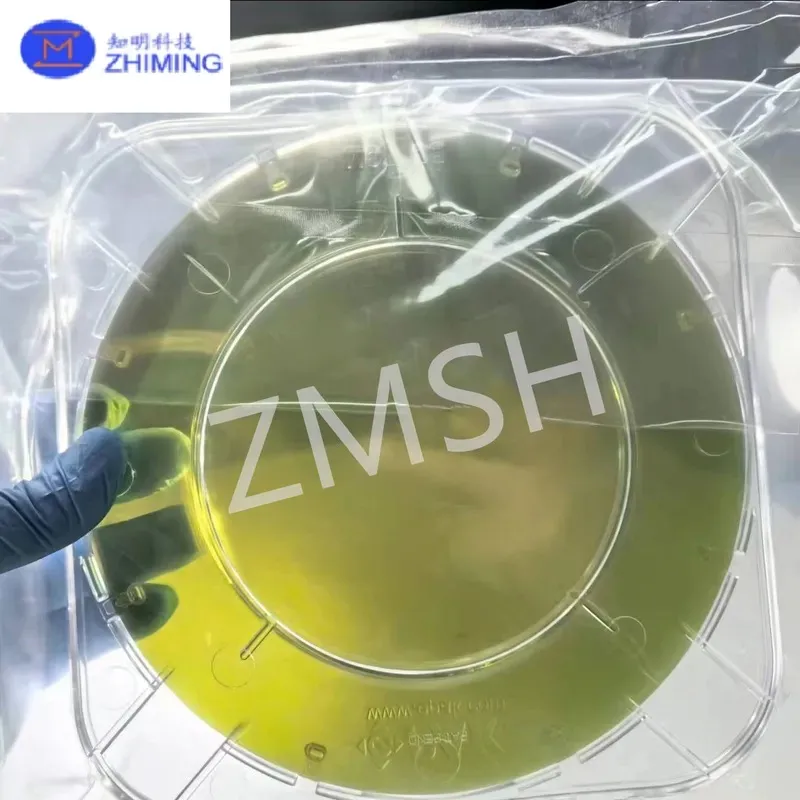
Below is a structured guide covering key aspects of supplier evaluation, quality control systems, and delivery performance.
✅ 1. Why China for SiC Wafers?
China’s SiC wafer industry has scaled rapidly, with substantial investments targeting:
- Domestic supply chain independence
- Capacity expansion to meet automotive and industrial demand
- Competitive pricing through localized manufacturing
Many local suppliers now offer:
- 4″, 6″ and 8″ SiC wafers (with 8″ increasingly mainstream)
- Competitive pricing vs. imports
- Faster response cycles
This makes China an increasingly strategic choice for global and domestic manufacturers.
✅ 2. Key Quality Control Dimensions
Ensuring wafer quality isn’t just a checkbox — it directly affects device yield and long-term reliability. Here are the core quality metrics to evaluate:
📌 a. Crystal Quality (Defect Density)
- Micropipe and dislocation density must be tightly controlled.
- Lower defect densities translate to higher yields in power device fabrication.
📌 b. Surface Flatness & TTV
- Total Thickness Variation (TTV) and surface flatness affect lithography and device uniformity.
- Suppliers should publish and test to strict TTV tolerances.
📌 c. Doping Uniformity
- Wafer resistivity and doping uniformity across the wafer ensure consistent device performance.
- ICP, SIMS or other profiling methods should be part of regular QA.
📌 d. Edge & Lapping Quality
- Clean, crack-free edges and well-controlled lapping/polish reduce breakage during processing.
📌 e. ISO / IATF / Industry Certifications
- Check whether the supplier is certified (e.g., ISO 9001, IATF 16949 for automotive) — especially important for automotive and aerospace customers.
✅ 3. Quality Control Systems & Tools (Best Practice)
Top China SiC wafer firms typically implement:
| QC Stage | Technology & Inspection | วัตถุประสงค์ |
|---|---|---|
| Ingot Growth | XRD, Optical Microscopy | Detect crystal defects early |
| Wafer Slicing | Laser/EDM with post-polish inspection | Minimize subsurface damage |
| การขัดเงา | CMP with interferometry | Ensure ultra-flat surfaces |
| Final Inspection | Automated optical inspection (AOI), defect mapping | Comprehensive defect capture |
Software QC traceability systems help link wafer batches to test results, enabling fast root-cause analysis when issues arise.
✅ 4. Lead Time: China Advantage
China’s manufacturing ecosystem provides multiple lead-time advantages:
🔹 Localized Supply Chain
Close proximity between epitaxy, slicing, polishing, and packaging enables synchronized schedules and rapid corrections.
🔹 Capacity Scaling
Local fabs are increasing capacity for 4–8 inch wafers, reducing bottlenecks seen with some foreign suppliers.
🔹 Responsive Communication
Domestic suppliers often offer faster responses on quotes, technical questions, and samples — essential in rapid development cycles.
Typical Lead Time Ranges (Indicative)
| ขนาดเวเฟอร์ | Standard Delivery | Rush / Priority |
|---|---|---|
| 4″ | ~4–6 weeks | ~2–3 weeks |
| 6″ | ~6–8 weeks | ~3–5 weeks |
| 8″ | ~8–12 weeks | ~4–7 weeks |
Note: Actual lead times vary by order size, specification tightness, seasonality, and inventory level.
✅ 5. How to Compare Suppliers Efficiently
When evaluating China SiC wafer suppliers, consider:
📍 Specification Transparency
- Clear datasheets with measurable tolerances
- Wafer quality reports with optical maps and TTV data
📍 Sample Policy
- Availability of engineering samples before full purchase
- Sample inspection reports
📍 Technical Support
- Accessibility of technical engineers for process alignment
📍 Tracking & Reporting
- Weekly updates during production
- QA certificates with each shipment
📍 After-Sales Support
- Warranty terms on defects
- Rework / replacement policies
✅ 6. Key Takeaways for Procurement Teams
✔ Quality beats lowest price — particularly for high-performance and automotive applications.
✔ Transparent QC documentation simplifies incoming inspection and vendor qualification.
✔ Lead time predictability reduces risk in production planning.
✔ Building strategic partnerships with China suppliers can drive cost AND quality over time.
สรุป
As global demand for SiC power devices continues to rise, supplier selection has become a strategic decision rather than a purely cost-driven one. China-based SiC wafer suppliers are increasingly closing the gap with international players by strengthening crystal growth control, process stability, and quality traceability systems.
For procurement and engineering teams, evaluating defect control capability, process transparency, and lead time reliability is essential to reducing downstream risks and ensuring stable production. When assessed with clear technical criteria and long-term collaboration in mind, qualified China SiC wafer suppliers can offer a balanced advantage in quality consistency, delivery speed, and supply chain resilience.