
Optical glass is the backbone of advanced instruments, from precision lenses and microscopes to lasers and industrial imaging systems. Achieving high performance requires not just high-quality raw material but also meticulous processing methods. Each step in optical glass fabrication plays a critical role in determining the final product’s accuracy, durability, and optical performance.
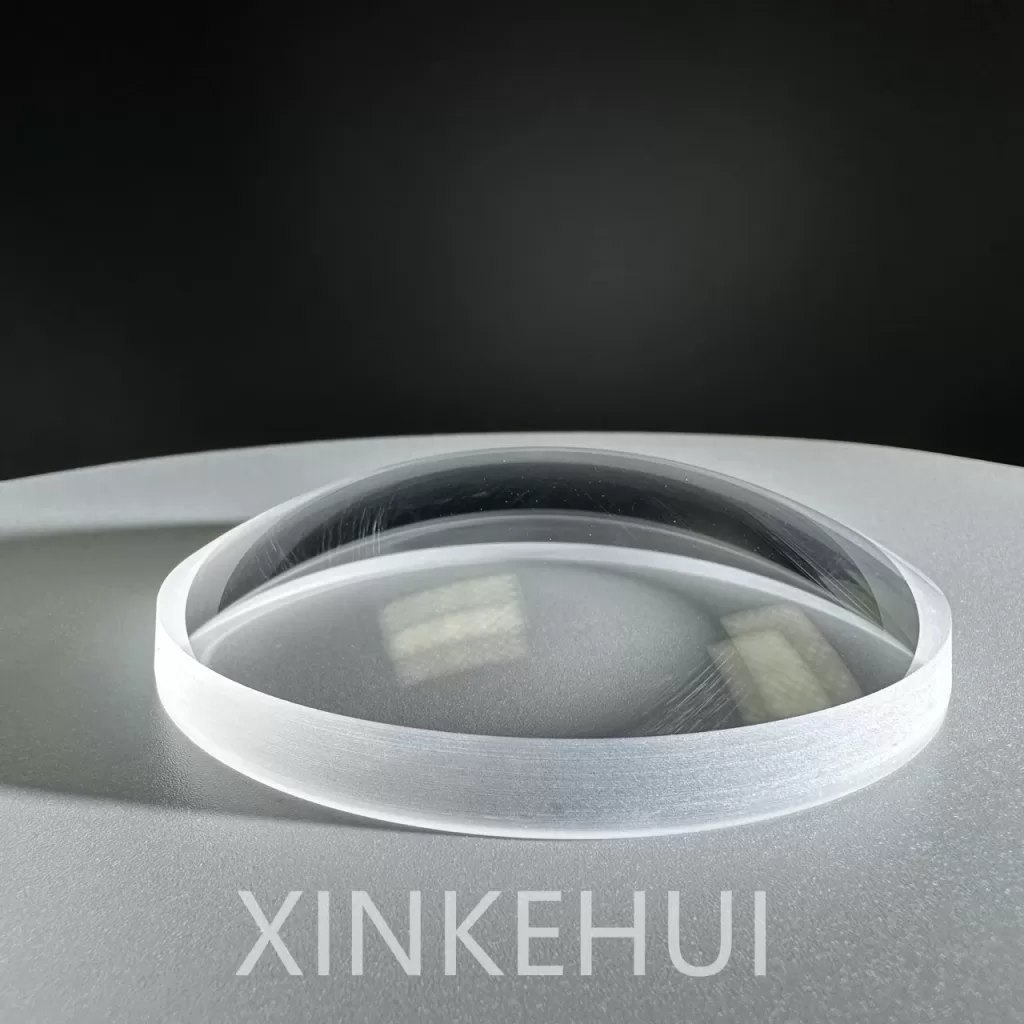
Cutting: Precision from the Start
The journey of optical glass begins with cutting. Whether plates, discs, or irregular shapes, CNC machining allows for extreme precision, with tolerances often within 0.05mm. This step ensures that every piece conforms to the stringent dimensional requirements of modern optical devices, forming the foundation for all subsequent processing.
Drilling: Tackling High-Hardness Materials
Drilling optical glass, especially sapphire hoặc quartz, presents unique challenges due to their extreme hardness. Using tungsten steel alloy drill bits with superior hardness, CNC machines can create round, square, or irregular holes with exceptional accuracy, enabling optical components to fit perfectly within assemblies.
Chamfering: Smooth Edges for Safe Handling
Sharp edges in optical glass are more than a safety hazard—they can propagate cracks during use. Chamfering, or edge grinding, passivates these edges, preventing injury and improving durability. CNC-controlled chamfering can produce straight, rounded, or beveled edges with consistently precise dimensions.
Slotting: Adaptability in Design
Slotting is crucial for integrating optical glass into complex assemblies. Fine grooves, often as narrow as 1mm, allow components to interface seamlessly with holders, mounts, or mechanical systems, expanding design flexibility while maintaining high optical precision.
Polishing: The Art of Smoothness
Polishing is perhaps the most critical stage in optical glass processing. The hardness of materials like quartz and sapphire makes polishing challenging, but surface finish determines how light interacts with the glass. Typical standards like 60/40 are common, while high-end applications can achieve 20/10, delivering near-perfect smoothness for lenses, mirrors, and optical windows.
Welding: Integrity Without Compromise
For assemblies made entirely of the same material, glass welding ensures structural integrity. Techniques such as powder fusion welding or manual welding bond components like quartz glass or laboratory glassware without compromising optical clarity.
Centering & Edging: Aligning for Precision
Lenses must not only have exact diameters but also precise alignment. Centering ensures the optical axis coincides with the mechanical axis, while edging defines the final diameter with micron-level accuracy, critical for high-performance optical systems.
Coating: Enhancing Performance
Optical coatings are thin films applied to substrates to improve functionality. Processes like evaporation hoặc sputtering enable anti-reflective (AR), high-reflective (HR), filtering, or protective coatings. These layers enhance light transmission, reduce reflections, and protect delicate surfaces in lasers, imaging systems, and industrial optics.
Metrology: Measuring Perfection
Every step in optical glass processing is validated through metrology, which measures surface accuracy, roughness, curvature radius, center thickness, outer diameter, and surface defects. Rigorous metrology ensures that components meet the exacting specifications required for scientific, industrial, and commercial applications.
Kết luận
Processing optical glass is far more than shaping a piece of material—it’s a precise interplay of machining, polishing, alignment, coating, and quality inspection. Each technique, from CNC cutting to advanced coatings, directly affects the performance of lenses, mirrors, and optical instruments. By mastering these methods, manufacturers can produce optical glass that meets the demanding standards of modern technology, enabling everything from high-resolution imaging to next-generation laser systems.