
As the world accelerates toward electrification, artificial intelligence, and low-altitude mobility, industries are seeking materials that enable higher efficiency, higher power, and lower energy loss. Silicon carbide (SiC), a leading third-generation semiconductor, is rapidly emerging as a key enabler in this landscape.
It may not be a “brand-new material,” but it is quietly becoming a critical foundation for technological upgrades. So, what is SiC changing—and what challenges does it still face?Key Advantages of Silicon Carbide: Built for Extreme Conditions
Compared with traditional silicon, SiC offers four major advantages:
- Wide bandgap — enables higher-voltage operation
- High breakdown field — allows thinner, high-voltage devices
- Hohe Wärmeleitfähigkeit — improves heat dissipation
- High electron saturation velocity — faster switching speeds
These characteristics make it ideal for high-voltage, high-temperature, high-frequency, and high-power applications, significantly reducing energy loss and increasing system power density.
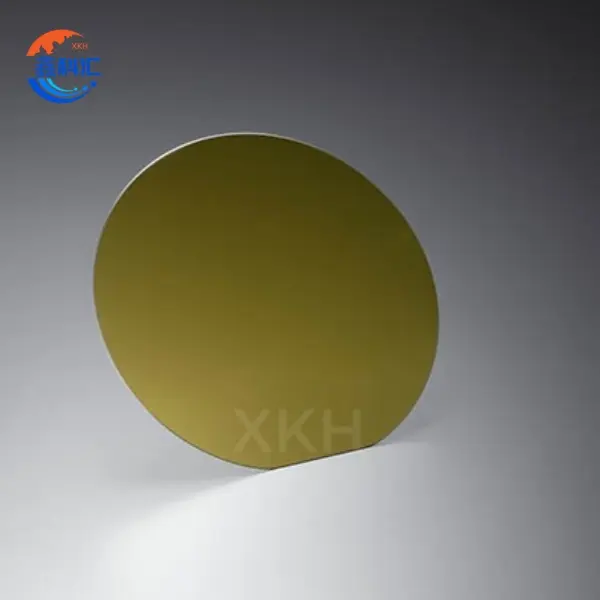
SiC in Electric Vehicles: The First Major Battlefield
Electric vehicles (EVs) have become the most mature and large-scale application for SiC.
Powertrain Improvements
Using SiC MOSFETs in motor controllers can:
- Increase power density by over 30%
- Achieve system efficiency close to 99%
- Reduce size and weight of electric drive systems
- Ensure stability under high-temperature conditions
For EVs, this translates directly into longer range, higher performance, and greater reliability.
High-Voltage Systems and Fast Charging
As 800V high-voltage architectures become mainstream, SiC’s low switching losses help improve fast-charging efficiency, reducing charge times and energy loss.
The high-voltage trend in EVs is a core driver of SiC industry growth.
Photovoltaics and Energy Storage: Efficiency Is Everything
In photovoltaic inverters and energy storage converters, even small efficiency gains have a major impact.
SiC devices enable:
- Conversion efficiency above 98%
- Smaller magnetic components for high-frequency operation
- Simplified thermal management
- 20–30% reduction in system volume
These advantages are especially notable in 1500V systems and high-temperature solar farms, highlighting SiC’s system-level benefits.
AI and Data Centers: Tackling the Hidden Energy Bottleneck
As AI workloads grow exponentially, data center energy consumption is rising sharply.
Using SiC in server power supplies and PFC circuits:
- Reduces switching losses
- Improves conversion efficiency
- Enhances thermal performance
- Reduces device footprint
Even a 1% improvement in efficiency can save gigawatt-hours of electricity annually in large-scale data centers, making SiC a crucial material for sustainable AI development.
eVTOL and Robotics: Emerging Applications Taking Shape
Low-Altitude Electric Aircraft
Electric vertical take-off and landing (eVTOL) aircraft require:
- Hohe Leistungsdichte
- Strict weight limits
- Exceptional reliability
SiC MOSFETs deliver higher efficiency and smaller system size, enabling feasible electric propulsion systems. With the 12-inch wafer mass production, the cost is expected to gradually decrease, boosting adoption.
Robotics
Robotic joint drives and motor controllers share architectural similarities with EV systems. Rising demand for efficient energy control is opening up a promising application space for SiC in the robotics industry.
Rail, Power Grids, and 5G: Natural Advantages for High-Voltage Systems
In traction converters and power grid applications, SiC offers:
- Higher power density
- Lower system weight
- Reduced energy loss
- Longer device lifespan
For RF communication systems, semi-insulating SiC provides low loss and high power density, supporting next-generation high-frequency communications and radar systems.
AR Glasses: Optical Applications on the Rise
In AR devices, SiC is used for optical waveguides.
Its advantages include:
- High refractive index
- Ausgezeichnete Wärmeleitfähigkeit
- Wider field of view
- Better heat management
As AR devices scale, SiC is expected to play a key role in next-generation wearable optics.
Challenges: Why SiC’s Market Penetration Is Still Limited
Despite its benefits, SiC faces several practical limitations:
- High production cost
- Crystal growth is complex
- Epitaxy and etching are challenging
- Yield improvement is ongoing
- Not a complete silicon replacement
- In low-voltage, low-power consumer electronics, silicon remains cheaper and more mature
- Differentiation from GaN
- SiC excels in high-voltage applications
- GaN is better for high-frequency scenarios
- Both will coexist rather than compete head-on
Future Outlook: Structural Growth, Not Explosive Replacement
Over the next few years, SiC is expected to see:
- 12-Zoll-SiC-Wafer mass production
- Wider automotive-grade certifications
- Mature domestic supply chains
- Gradual cost reduction
It is likely to remain a specialized high-end power semiconductor, rather than a universal silicon replacement.
Schlussfolgerung
From EVs to data centers, from eVTOL aircraft to solar farms, SiC is becoming a core enabler for next-generation high-efficiency systems. Its value lies not in replacing silicon everywhere, but in pushing the efficiency limits where performance matters most.
The real competition is not material versus material—it is efficiency versus energy loss. In this race, SiC is already on the starting line as a critical strategic material for the future.