
Silicon carbide (SiC) substrates have become a cornerstone material for power electronics, RF devices, and high-temperature semiconductor applications. As demand for high-efficiency electric vehicles, renewable energy systems, and fast-charging infrastructure grows, the quality of SiC substrates increasingly determines device performance, yield, and long-term reliability.
However, “SiC substrate” is not a single, uniform product. Different suppliers, growth methods, and polishing processes can lead to significant variation in quality. For engineers, procurement managers, and device manufacturers, selecting the right Plaque de SiC is both a technical and strategic decision.
This guide distills years of industry practice and published research into five critical parameters you must evaluate before purchasing SiC substrates.
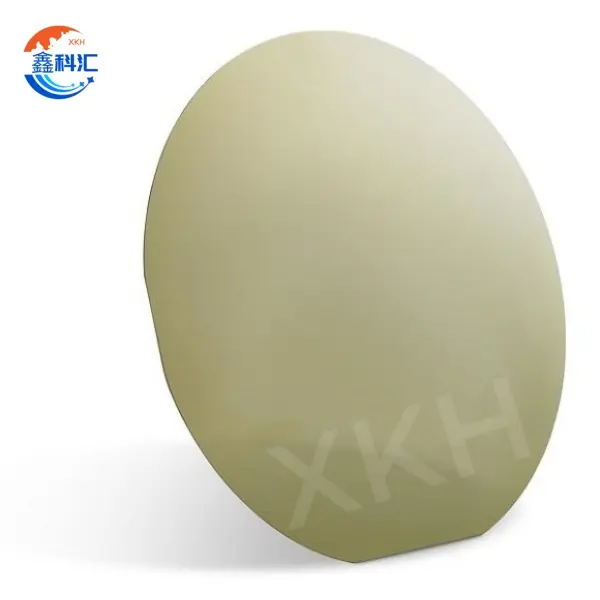
1. Crystal Quality: Micropipes, Dislocations, and Defect Density
The most fundamental factor in any SiC wafer is its crystal defect profile.
What to check:
- Micropipe density (MPD)
- Threading dislocation density (TDD)
- Basal plane dislocations (BPD)
- Défauts d'empilement
Why it matters:
Defects in the SiC crystal lattice can propagate into the epitaxial layer and ultimately into the device, causing:
- Leakage current increase
- Premature breakdown
- Réduction de la durée de vie de l'appareil
- Rendement de fabrication plus faible
Industry benchmark today:
- 6-inch SiC: micropipe density often < 1 cm⁻²
- 8-inch SiC: defect control is improving but still more challenging than 6-inch
Buyer tip:
Ask suppliers for defect mapping data, not just average numbers. Spatial distribution matters as much as total density.
2. Wafer Flatness and Total Thickness Variation (TTV)
Even if the crystal is high quality, poor mechanical flatness can ruin downstream processing.
Key metrics:
- TTV (Total Thickness Variation)
- Bow
- Warp
These parameters directly affect:
- Photolithography focus accuracy
- Epitaxial layer uniformity
- Chemical mechanical polishing (CMP) consistency
Typical expectations:
- Premium-grade wafers: TTV ≤ 10–15 µm (depending on size)
- High-performance power device lines demand even tighter control
Buyer tip:
If your process involves advanced lithography or high-voltage devices, prioritize flatness over minor cost savings.
3. Surface Roughness and Polishing Quality
SiC is an extremely hard material, making it difficult to polish. Poor surface quality can introduce hidden defects that are not visible to the naked eye.
What to evaluate:
- Ra (surface roughness)
- Presence of scratches or subsurface damage
- CMP polishing uniformity
Why this is critical:
Surface defects can:
- Trap impurities during epitaxy
- Create local electric field distortion
- Reduce breakdown voltage in power devices
Best practice:
Request both AFM (atomic force microscopy) et optical inspection data before committing to large-volume orders.
4. Resistivity and Doping Uniformity
SiC substrates can be:
- Semi-insulating (SI-SiC) – often used for RF and microwave devices
- N-type conductive SiC – used for power electronics
Critical checks:
- Average resistivity
- Spatial uniformity of resistivity
- Dopant type and concentration consistency
Why this matters:
Non-uniform doping can lead to:
- Uneven device performance across a wafer
- Yield loss in mass production
- Unpredictable thermal behavior under high power
Buyer tip:
For power devices, small variations in resistivity can significantly impact MOSFET or diode performance.
5. Wafer Size and Supply Stability
SiC is transitioning from 6-inch to 8-inch wafers, but supply remains constrained.
What to consider:
- Current wafer size availability
- Supplier roadmap
- Long-term capacity commitment
- Price stability
Market reality:
- 6-inch SiC is mature and widely available
- 8-inch SiC offers cost advantages per chip but still has limited global supply
Strategic advice:
If you are designing a new product platform, consider:
- Starting R&D on 6-inch
- Planning future migration to 8-inch
Putting It All Together: A Practical Checklist
Before signing a purchase order, ask your supplier for:
- Defect density map (not just averages)
- TTV, bow, and warp data
- Surface roughness report (AFM preferred)
- Resistivity uniformity map
- Production roadmap for 6-inch vs 8-inch
A reliable SiC supplier should be transparent with data and willing to provide sample wafers for validation.
Final Thoughts
Choosing the right SiC substrate is not merely a procurement decision—it is a foundational technology choice that shapes your entire device performance and manufacturing success.