
Silicon carbide (SiC) wafers, a core substrate for third-generation semiconductors, are rapidly becoming essential in high-performance power electronics and next-generation devices. Thanks to their superior electrical and thermal properties, SiC wafers are driving innovations in electric vehicles (EVs), renewable energy inverters, 5G base stations, and high-speed rail systems. As demand for high-efficiency, high-voltage semiconductors grows exponentially, SiC wafer manufacturers are gaining unprecedented strategic importance. This article provides an expert analysis of SiC wafer manufacturers, covering technology, market landscape, and future trends.
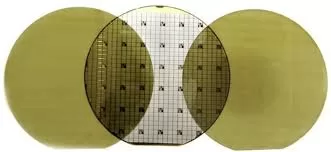
Why Silicon Carbide Wafers Matter
SiC wafers serve as the substrate for high-performance power devices. Compared to conventional silicon (Si), SiC offers significant advantages:
- Higher Breakdown Electric Field
SiC has an electric breakdown field approximately 10 times that of Si, allowing devices to handle higher voltages, making it ideal for medium- to high-voltage applications above 1200V. - Superior Thermal Conductivity
SiC’s thermal conductivity is 3–4 times higher than silicon, enhancing heat dissipation, increasing power density, and improving device reliability. - High-Frequency and High-Efficiency Operation
The wide bandgap of SiC reduces conduction losses and allows faster switching speeds, enabling highly efficient power conversion.
Because of these properties, SiC wafers are not merely raw materials—they are the foundation enabling commercialization of advanced power electronics, such as SiC MOSFETs and SiC diodes.
Leading Global SiC Wafer Manufacturers
The global SiC wafer market is relatively concentrated, with a few key players controlling the majority of capacity and technological expertise. Notable manufacturers include:
1. Wolfspeed (formerly Cree, USA)
Wolfspeed is a pioneer in SiC materials and devices:
- Offers high-purity, large-diameter SiC wafers (4-inch and 6-inch) for volume production.
- Leads in 150 mm and 200 mm wafer technology and expansion plans.
- Supplies wafers to top global power device manufacturers.
Wolfspeed integrates material production, epitaxial growth, and device manufacturing, establishing a benchmark for wafer quality, defect control, and yield stability.
2. II-VI Incorporated (USA)
Through subsidiaries like Norstel, II-VI provides:
- High-quality SiC wafers for industrial and communication markets.
- Facilities in Europe and the USA, emphasizing surface quality and uniformity.
- Semi-insulating SiC wafers for RF and high-speed applications.
II-VI’s focus on specialized wafer types supports advanced RF devices and high-frequency power electronics.
3. SiCrystal / ROHM (Japan)
SiCrystal, a subsidiary of ROHM, is a leading Japanese manufacturer:
- Produces high-purity, reliable SiC wafers for automotive and industrial applications.
- Expertise in seed crystal growth and stepwise crystallization ensures stable wafer quality.
- Collaborates closely with domestic device manufacturers, particularly for automotive-grade SiC devices.
Japan’s emphasis on reliability and quality makes SiCrystal wafers trusted in critical automotive and industrial systems.
4. SK Siltron (South Korea)
SK Siltron, a rising Asian SiC wafer supplier:
- Produces 150 mm SiC wafers with a focus on automotive and industrial clients.
- Collaborates with device manufacturers to optimize wafer performance and supply stability.
Although newer to the market than Western leaders, SK Siltron’s investment in production capacity and quality control positions it for strong growth.
SiC Wafer Manufacturing in China
China’s domestic SiC wafer industry has seen rapid growth due to rising EV, industrial inverter, and power electronics demand:
- Several Chinese companies now produce SiC wafers and are developing high-purity, large-diameter technologies.
- Collaborative efforts between research institutes and companies are accelerating wafer quality improvements.
- Government policies supporting semiconductor materials domestication drive investment and innovation.
While Chinese manufacturers are still catching up to international leaders in terms of defect control and large-diameter wafer production, they are quickly building technical expertise and supply chain resilience.
Key Technical Challenges
Despite their advantages, SiC wafers pose significant manufacturing challenges:
- Defect Control
Crystal growth can introduce dislocations, micropipes, and other defects that affect device yield and reliability. Manufacturers must maintain tight control over these defects to ensure high-quality wafers. - Large-Diameter Wafer Production
Expanding from 4-inch to 6-inch or 8-inch wafers requires advanced equipment, precise thermal management, and robust quality assurance. Yield declines can be significant if processes are not carefully optimized. - Uniformidade da camada epitaxial
High-quality epitaxial SiC layers are critical for device performance. Achieving uniform doping and thickness across large wafers is technically demanding. - Cost Management
SiC wafer production remains more expensive than silicon. Balancing high yield, material quality, and production efficiency is essential to meet commercial demand.
Market Outlook
The global SiC wafer market is projected to grow at a robust rate over the next decade, driven by:
- Veículos eléctricos (VEs): SiC MOSFETs and diodes improve inverter efficiency, reducing energy loss and extending driving range.
- Energias renováveis: SiC-based inverters increase efficiency and reduce cooling requirements.
- Eletrónica industrial: High-power motors, UPS systems, and traction drives benefit from SiC’s high thermal and voltage tolerance.
Wolfspeed, II-VI, SiCrystal, and SK Siltron remain key suppliers, but China’s domestic capacity is expected to expand rapidly, reducing reliance on imports and accelerating innovation.
Conclusão
Silicon carbide wafer manufacturers are pivotal to the global semiconductor industry. Their expertise in crystal growth, wafer processing, and defect control underpins the next generation of high-efficiency power devices. While Western companies currently dominate technology and large-diameter production, Asian manufacturers, particularly in Japan, South Korea, and China, are rapidly enhancing capabilities. As SiC adoption continues to rise in EVs, renewable energy, and industrial electronics, the role of trusted, high-quality SiC wafer suppliers will only become more critical.
For stakeholders in the semiconductor ecosystem, understanding the capabilities, challenges, and strategic positioning of SiC wafer manufacturers is essential for long-term success.