
Sapphire has long been associated with gemstones, luxury watches, and advanced optical components, but few people realize that its extraordinary performance comes from something far more fundamental—its crystal structure. Beneath its clear, durable surface lies a precise atomic arrangement that gives sapphire its strength, stability, and optical clarity. Understanding the sapphire crystal structure reveals why this material is so valuable in science and industry.
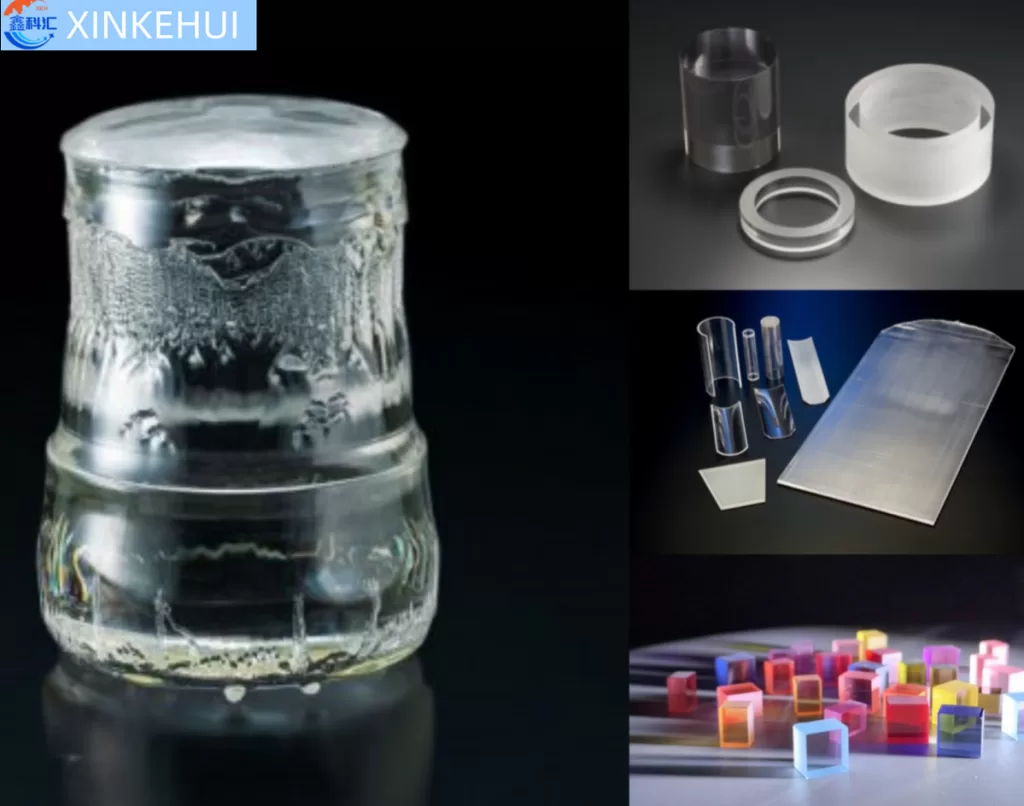
Sapphire Is More Than a Gemstone
Chemically, sapphire is crystalline aluminum oxide (Al₂O₃). While the formula is simple, the way atoms organize themselves inside the crystal is highly sophisticated. Sapphire belongs to the trigonal (hexagonal) crystal system, which is shared by materials such as quartz and certain forms of silicon carbide. This symmetry gives sapphire its characteristic anisotropic properties—its performance changes depending on the direction in which the crystal is oriented.
This structural feature is one of the reasons sapphire is widely used in substrates for LEDs, RF devices, and optical windows that must withstand extreme conditions.
The Corundum Structure: Ordered and Efficient
Sapphire is part of the corundum family. In this structure, aluminum atoms occupy two-thirds of the available octahedral sites, while oxygen ions form a tightly packed lattice around them. The result is a strong three-dimensional network of Al–O bonds. These bonds are so durable that they make sapphire the second hardest natural material after diamond.
This dense packing also leads to excellent thermal conductivity and outstanding resistance to chemical corrosion, making sapphire a trusted material in semiconductor epitaxy, aerospace windows, and analytical instrumentation.
Why Crystal Orientation Matters
Sapphire wafers are typically cut along different planes such as C-plane, A-plane, R-plane, and M-plane. Each orientation exposes a different atomic arrangement, which directly affects epitaxial growth, optical behavior, and stress distribution.
For example:
- C-plane sapphire is widely used for GaN epitaxy in LED production because it promotes stable crystal alignment.
- A-plane sapphire is suitable for anisotropic optical components.
- R-plane sapphire provides unique advantages in certain infrared applications.
These orientations allow engineers to tailor sapphire’s properties to match specific device requirements.
A Structure Built for Extreme Environments
The durability of sapphire originates from its crystal structure. Al–O bonds have high ionic and covalent character, making the lattice difficult to break—even under heat, pressure, or radiation. This resilience enables sapphire windows to survive rocket launches, high-pressure chambers, and corrosive industrial processes.
At the same time, its transparency across ultraviolet, visible, and infrared wavelengths makes it an ideal optical material where glass or quartz would fail.
The Future Powered by Crystal Precision
As industries pursue more efficient, smaller, and more reliable technologies, the sapphire crystal structure is becoming increasingly important. From smartphone lenses and laser systems to epitaxial substrates for advanced semiconductors, the precision of sapphire’s atomic arrangement is the foundation of its value.
Understanding the sapphire crystal structure not only explains why this material is exceptionally strong—it also reveals why sapphire will continue to play a central role in next-generation optics, electronics, and high-performance engineering.