
Beskrivning
1. Product Overview
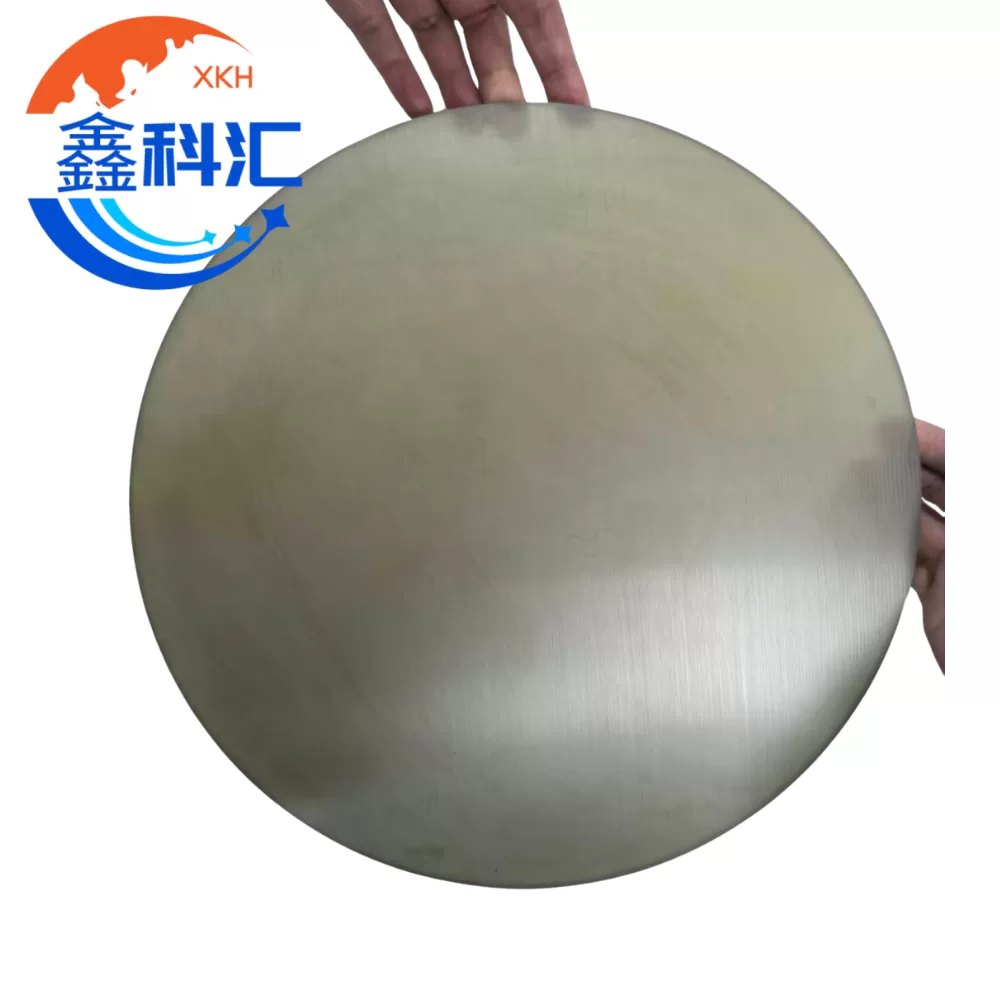
The 12-inch 4H-N silicon carbide (SiC) substrate is a premium material platform engineered for the most demanding applications in power electronics, high-voltage devices, and RF/microwave components. Leveraging the superior thermal conductivity, wide bandgap, and high breakdown voltage of SiC, these substrates enable next-generation semiconductor devices to achieve higher efficiency, reduced energy loss, and enhanced reliability under extreme operating conditions.
We provide both production-grade och dummy-grade wafers to support a wide range of applications:
Production-grade wafers: Optimized for device fabrication, epitaxial growth, and mass production processes.
Dummy-grade wafers: Designed for equipment calibration, process tuning, and non-device runs, where surface perfection and defect control are less critical.
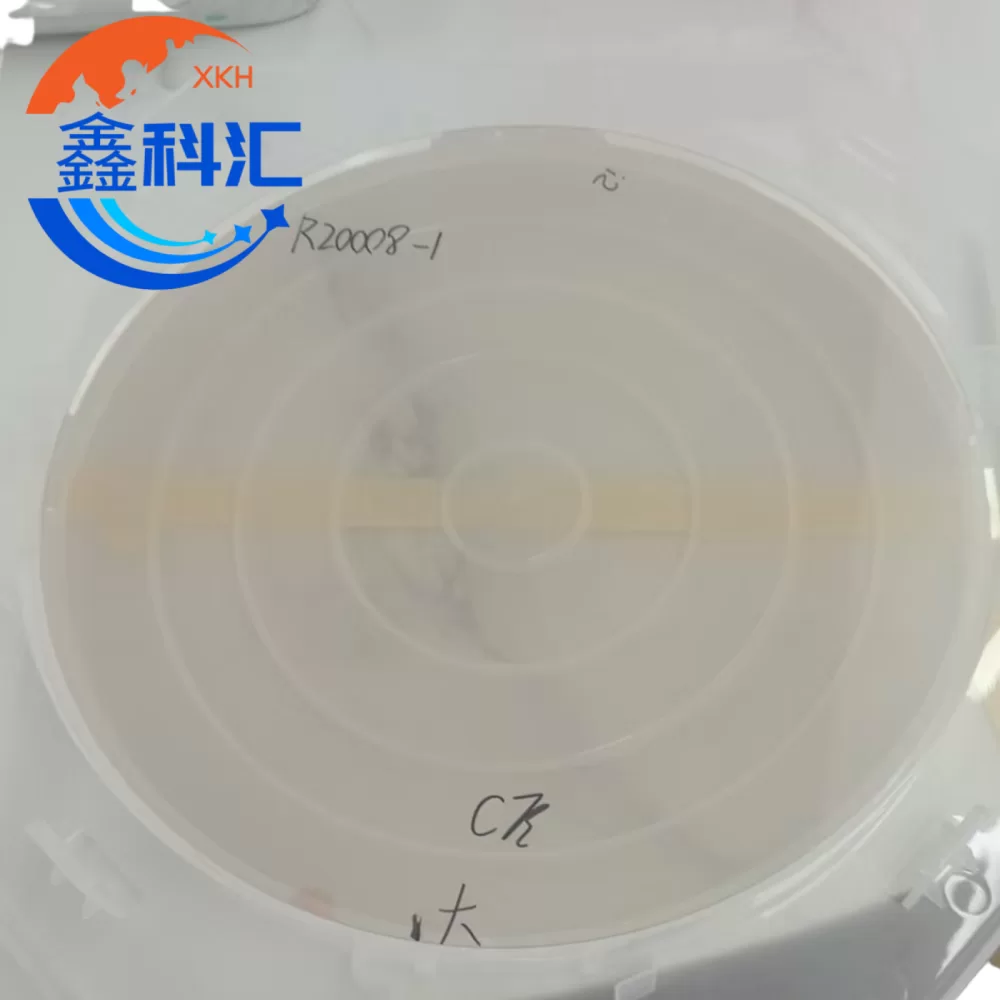
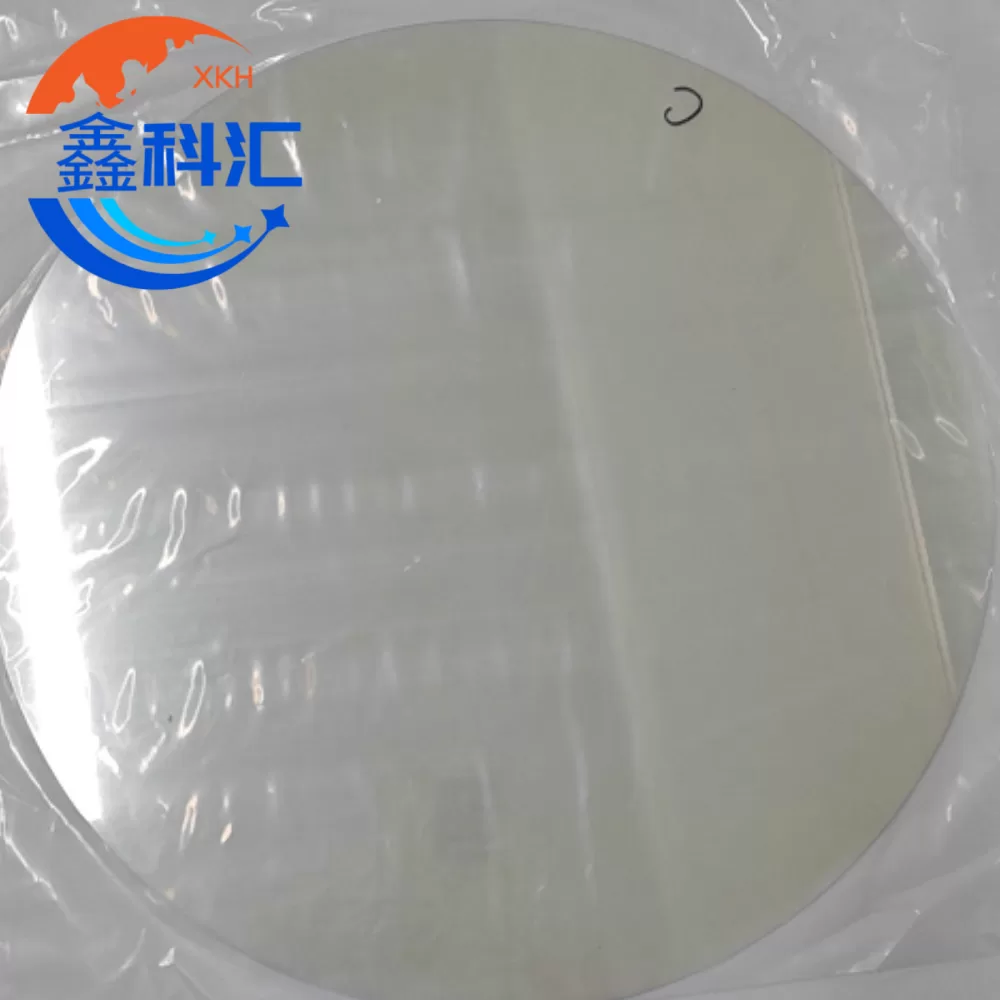
Available in both green (600 μm) och transparent (700 μm) thicknesses, these wafers can meet diverse process requirements and are compatible with standard 12-inch semiconductor processing equipment.

2. 12-Inch Silicon Carbide Substrate Specification
| Föremål | N-type Production Grade | N-type Dummy Grade | SI-type Production Grade |
|---|---|---|---|
| Crystal Structure (Polytype) | 4H-N SiC | 4H-N SiC | 4H SiC |
| Doping Type | N-typ | N-typ | / |
| Diameter | 300 ± 0.5 mm | 300 ± 0.5 mm | 300 ± 0.5 mm |
| Tjocklek | Green: 600 ± 100 μm / Transparent: 700 ± 100 μm | Same as Production | Same as Production |
| Surface Orientation | 4° toward <11-20> ± 0.5° | Same | Same |
| Primary Flat / Notch | Notch / Full Round | Notch / Full Round | Notch / Full Round |
| Notch Depth | 1.0 – 1.5 mm | 1.0 – 1.5 mm | 1.0 – 1.5 mm |
| TTV (Total Thickness Variation) | ≤ 10 μm | NA | ≤ 10 μm |
| Micropipe Density (MPD) | ≤ 5 ea/cm² | NA | ≤ 5 ea/cm² |
| Resistivity Measurement | Measured at central 8-inch equivalent zone | NA | Measured at central 8-inch equivalent zone |
| Si-Surface Treatment | CMP Polished | Grinding | CMP Polished |
| Edge Processing | Chamfer | No Chamfer | Chamfer |
| Edge Chips | Allowed depth < 0.5 mm | Allowed depth < 1.0 mm | Allowed depth < 0.5 mm |
| Laser Marking | C-side marking / Customer specified | C-side marking | C-side marking / Customer specified |
| Polytype Inspection (Polarized Light) | No polytype (3 mm edge exclusion) | Polytype area < 5% (3 mm edge exclusion) | No polytype (3 mm edge exclusion) |
| Crack Inspection (High-Intensity Light) | No cracks (3 mm edge exclusion) | Not specified | No cracks (3 mm edge exclusion) |
3. Grade Definition
Produktionsgrad
Production-grade wafers meet the highest standards of dimensional uniformity, surface quality, and defect control. They are suitable for:
Epitaxial layer growth for SiC power devices
High-voltage and high-frequency device fabrication
Mass production lines requiring tight TTV, low micropipe density, and strict crack control
Dummy Grad
Dummy-grade wafers are intended for:
Equipment setup and calibration
Process development and optimization
Non-device runs where surface polishing, chamfering, and micropipe control are non-critical

4. Inspection & Quality Assurance
All production-grade wafers undergo rigorous inspection to ensure reliability and consistency:
Polytype verification using polarized light microscopy to ensure crystal uniformity
Crack detection with high-intensity light to identify micro-cracks
Dimensional verification: diameter, thickness, and total thickness variation (TTV)
Surface and edge assessment: evaluating edge chamfer, chipping, and surface polish quality
Inspection zones exclude a 3 mm edge margin, consistent with industry standards, ensuring that the wafer interior meets precise electrical and mechanical specifications.
5. Typical Applications
SiC Power Devices: MOSFETs, diodes, and IGBTs
High-Voltage Applications: Automotive, industrial, and renewable energy inverters
RF- och mikrovågsenheter: Semi-insulating (SI) wafers for RF, microwave, and high-frequency applications
Process Development & Equipment Qualification: Using dummy wafers for calibration, laser tuning, and prototype runs
6. Frequently Asked Questions (FAQ)
Q1: What is the difference between 4H-N SiC and SI-type 4H SiC?
4H-N SiC is N-type conductive material ideal for power devices, while SI-type 4H SiC is semi-insulating, used mainly in RF and high-frequency applications.
Q2: Why measure resistivity in the central 8-inch equivalent zone?
The central region of a 12-inch wafer offers the most uniform electrical properties. Measuring this zone ensures stable and comparable resistivity across wafers.
Q3: Can the notch orientation or laser marking be customized?
Yes. Both notch configuration and laser marking content can be customized to meet specific customer requirements.
Q4: Are dummy wafers suitable for epitaxy or device fabrication?
No. Dummy wafers are designed solely for equipment setup and process testing, not for device production.
Q5: What edge quality is guaranteed for production wafers?
Production-grade wafers feature chamfered edges with edge chipping depth ≤ 0.5 mm for safe handling and process compatibility.
Q6: Are green and transparent wafers available?
Yes. Green wafers (600 μm) and transparent wafers (700 μm) are available depending on processing needs.
Q7: Can the wafers be used in extreme high-temperature or high-voltage processes?
Absolutely. 4H-N SiC substrates provide superior thermal conductivity and electrical stability, making them ideal for high-temperature, high-voltage, and high-frequency device manufacturing.


Recensioner
Det finns inga recensioner än.