
SiC Wafer Market in 2026: Why Price Is Giving Way to Yield, Quality and 200 mm Qualification
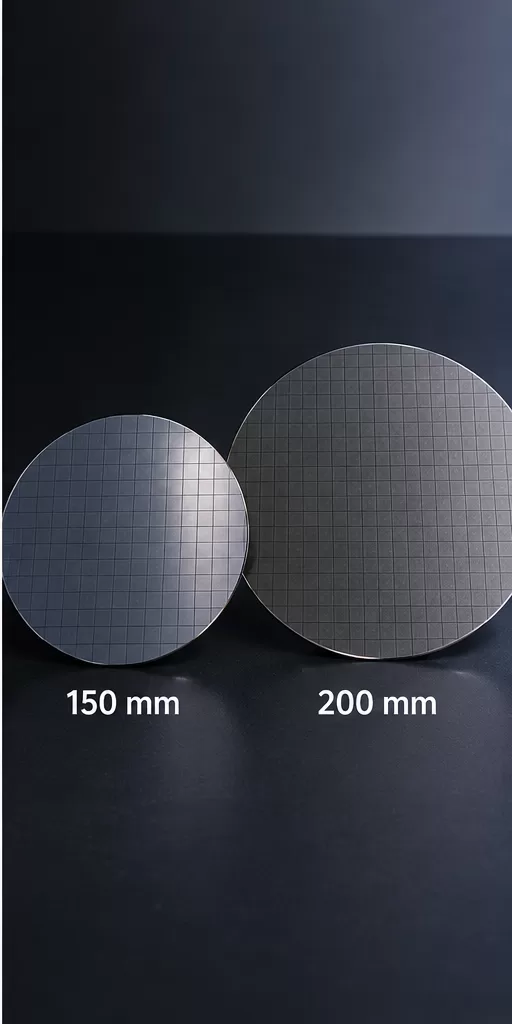
For much of the recent silicon carbide cycle, the discussion around SiC wafers was dominated by two subjects: capacity and price. Suppliers added crystal-growth capacity, Chinese manufacturers expanded aggressively, 150 mm substrate prices declined, and almost every major SiC producer announced a roadmap toward 200 mm production. In 2026, however, the market is entering a […]
2026 Marks a Turning Point for Silicon Carbide: From “Who Can Make It?” to “Who Can Make It Cheaper?”
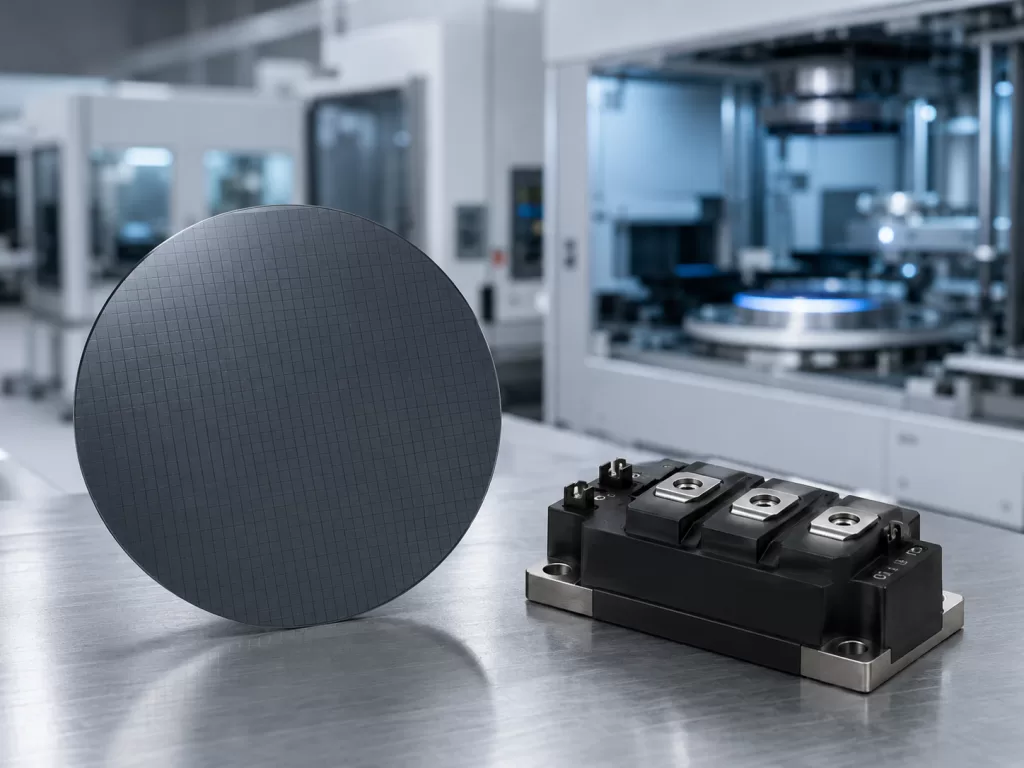
For years, the silicon carbide industry had one overriding question: Who can manufacture high-quality SiC at scale? Crystal growth was difficult. Wafer supply was limited. Defect control was challenging. Device capacity was insufficient, and demand from electric vehicles encouraged manufacturers throughout the supply chain to expand aggressively. In 2026, however, the competitive landscape is changing. […]
8-Inch SiC Wafer Specifications: Diameter, Thickness, Resistivity and Defect Limits
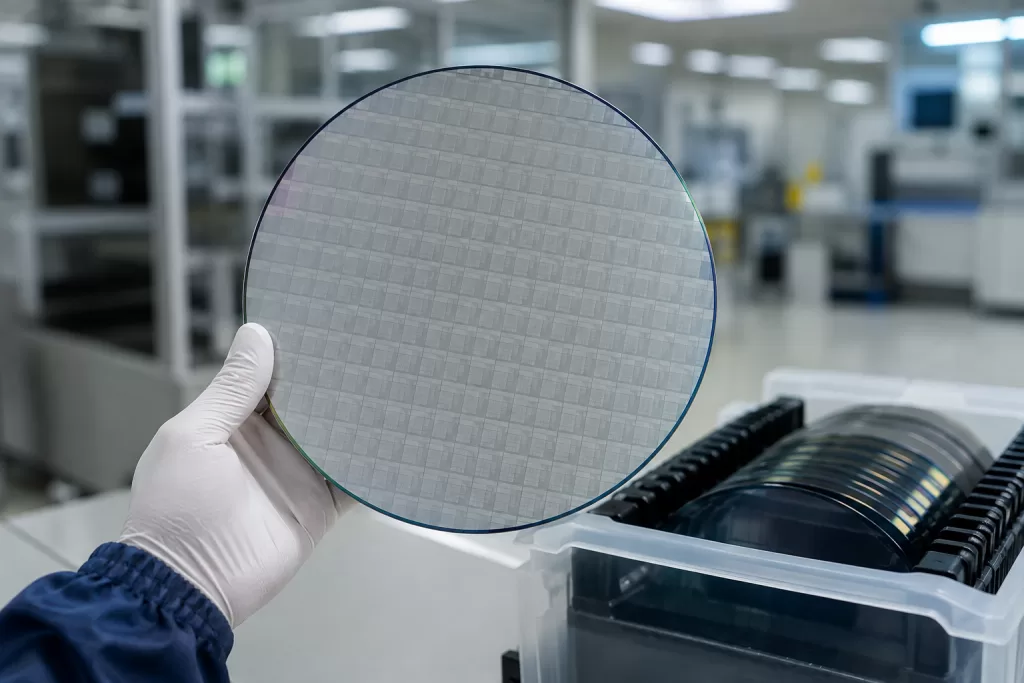
Silicon carbide (SiC) has become one of the most important semiconductor materials for high-power, high-voltage and high-frequency applications. As electric vehicles, renewable energy systems, AI power supplies and industrial automation continue to grow, the demand for larger SiC substrates is increasing rapidly. Compared with traditional 6-inch wafers, 8-inch (200 mm) SiC wafers provide more usable […]
Why Global Demand for SiC Wafers Continues to Grow Across EV, Renewable Energy and Industrial Electronics

Silicon carbide wafers have moved from a specialized semiconductor material to a strategically important foundation for modern power electronics. The strongest demand comes from electric vehicles, renewable energy infrastructure and industrial electronic systems. These sectors all face a similar engineering challenge: they must control increasingly large amounts of electrical power while reducing energy losses, thermal […]
Future Trends in SiC Wafer Manufacturing: Larger Diameters, Lower Defect Density and Higher Yield
Silicon carbide (SiC) has become one of the most important semiconductor materials for next-generation power electronics. Compared with conventional silicon, SiC offers a wider bandgap, higher critical electric field, greater thermal conductivity and superior high-temperature performance, making it the preferred material for electric vehicles (EVs), renewable energy systems, industrial motor drives, rail transportation and aerospace […]
SiC Wafer Manufacturing Challenges: Crystal Growth, Slicing, and Polishing
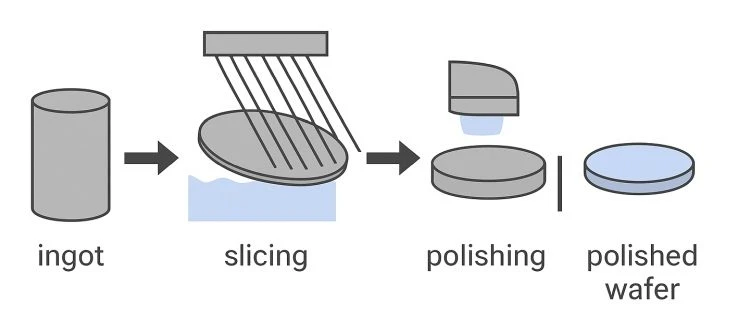
Silicon Carbide (SiC) has emerged as one of the most important semiconductor materials for next-generation power electronics. Thanks to its wide bandgap, high thermal conductivity, and superior breakdown electric field, SiC devices offer significant advantages over traditional silicon-based technologies in electric vehicles, renewable energy systems, industrial drives, and high-voltage power conversion. Despite these advantages, manufacturing […]
N-Type vs. Semi-Insulating SiC Wafers: Main Differences and Applications
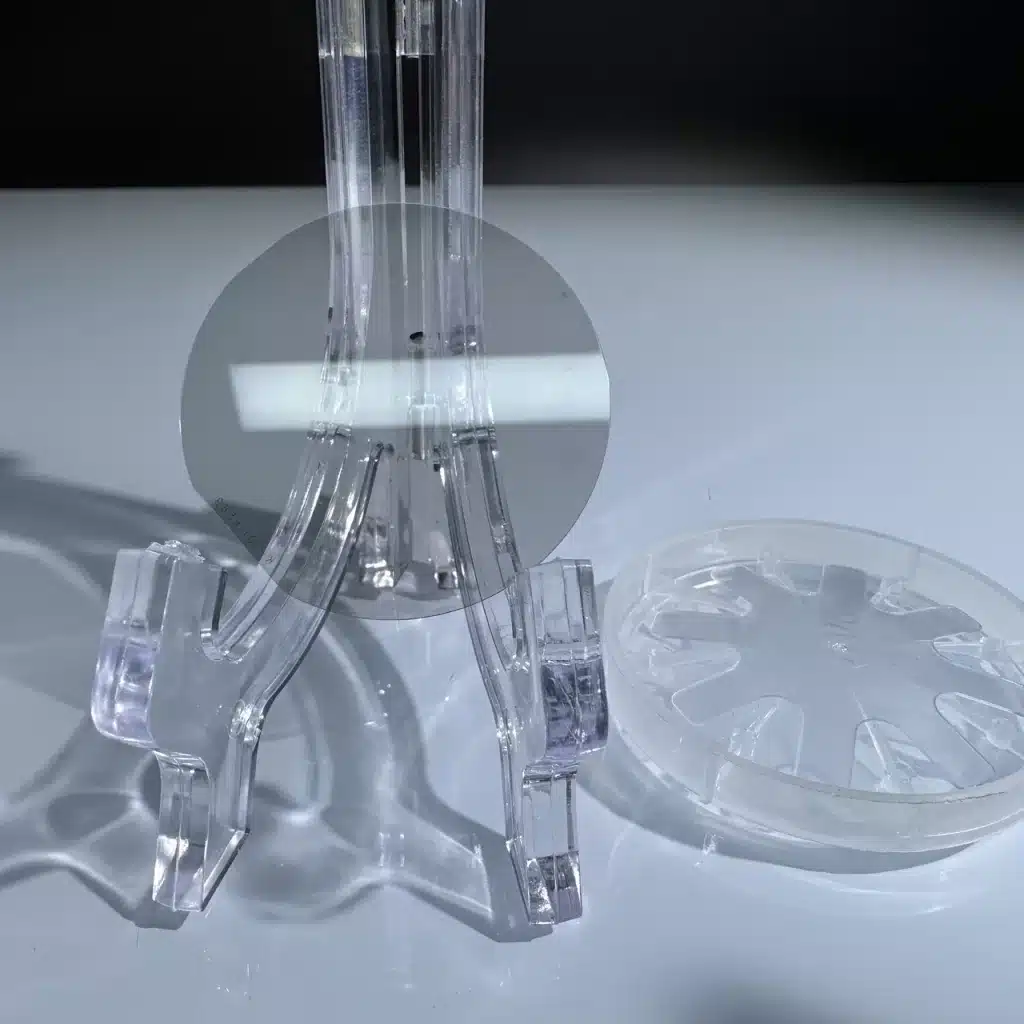
Silicon carbide (SiC) wafers have become one of the most important wide-bandgap semiconductor substrates in power electronics, RF communication, and high-temperature applications. Among the most widely used types are N-type SiC wafers and semi-insulating SiC wafers. Although they may look similar physically, their electrical behavior and application fields are fundamentally different. Choosing the wrong type […]
Why Advanced SiC Manufacturing Matters: Complexity Drives Technology Leadership
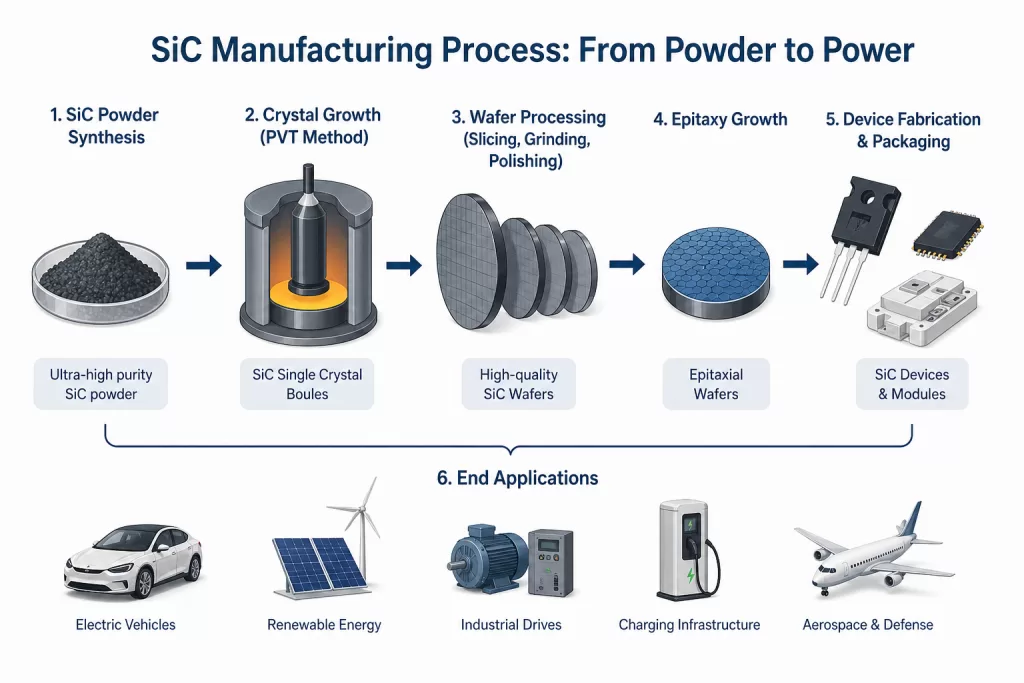
Silicon carbide (SiC) has rapidly become one of the most critical materials in modern semiconductor technology. As industries shift toward high-efficiency power electronics, electric vehicles (EVs), renewable energy systems, and high-frequency devices, the demand for high-quality SiC wafers continues to surge. However, one reality remains clear:the more complex the SiC process, the more critical advanced […]