
N-Type vs. Semi-Insulating SiC Wafers: Main Differences and Applications
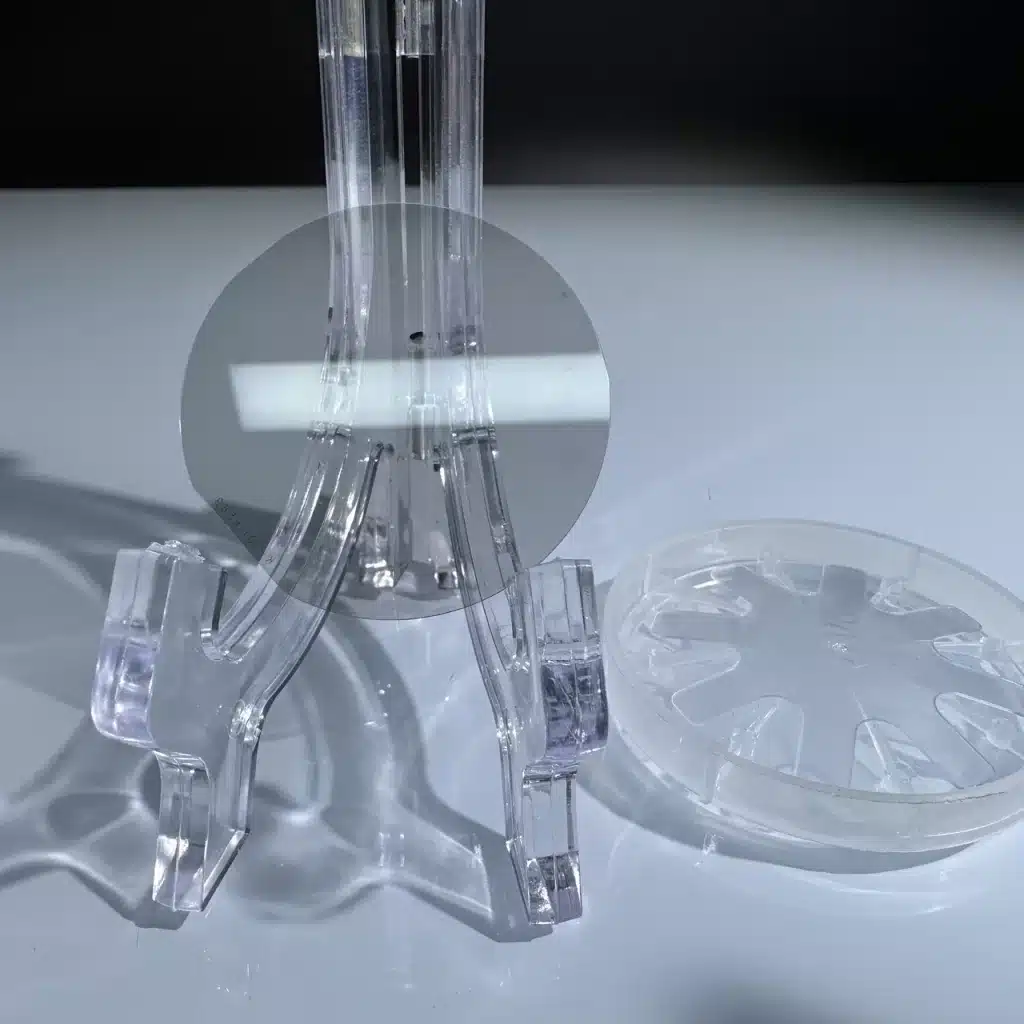
Silicon carbide (SiC) wafers have become one of the most important wide-bandgap semiconductor substrates in power electronics, RF communication, and high-temperature applications. Among the most widely used types are N-type SiC wafers and semi-insulating SiC wafers. Although they may look similar physically, their electrical behavior and application fields are fundamentally different. Choosing the wrong type […]
Silicon Carbide SiC Dummy Wafer: A Scientific and Educational Overview
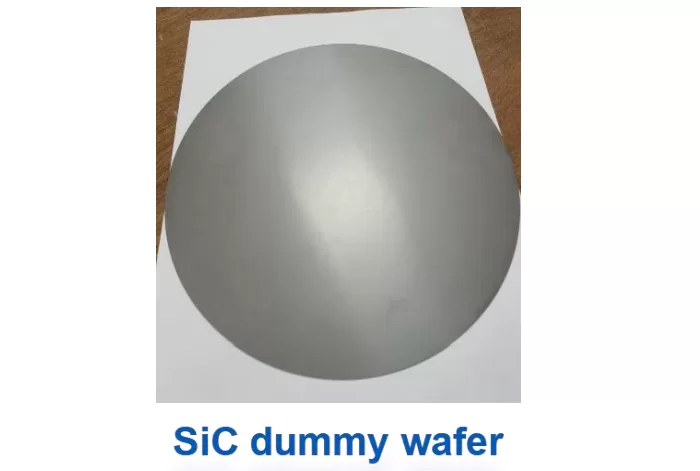
1. Introduction In semiconductor manufacturing, a dummy wafer (also known as a monitor wafer or blank wafer) is a non-device-bearing wafer used to support and stabilize process conditions. Among various materials, the Silicon Carbide (SiC) dummy wafer has gained increasing importance due to its outstanding thermal, mechanical, and chemical stability in extreme processing environments. This […]
Silicon Carbide (SiC) Wafer Dicing and Cutting Methods: Technologies, Challenges, and Future Trends
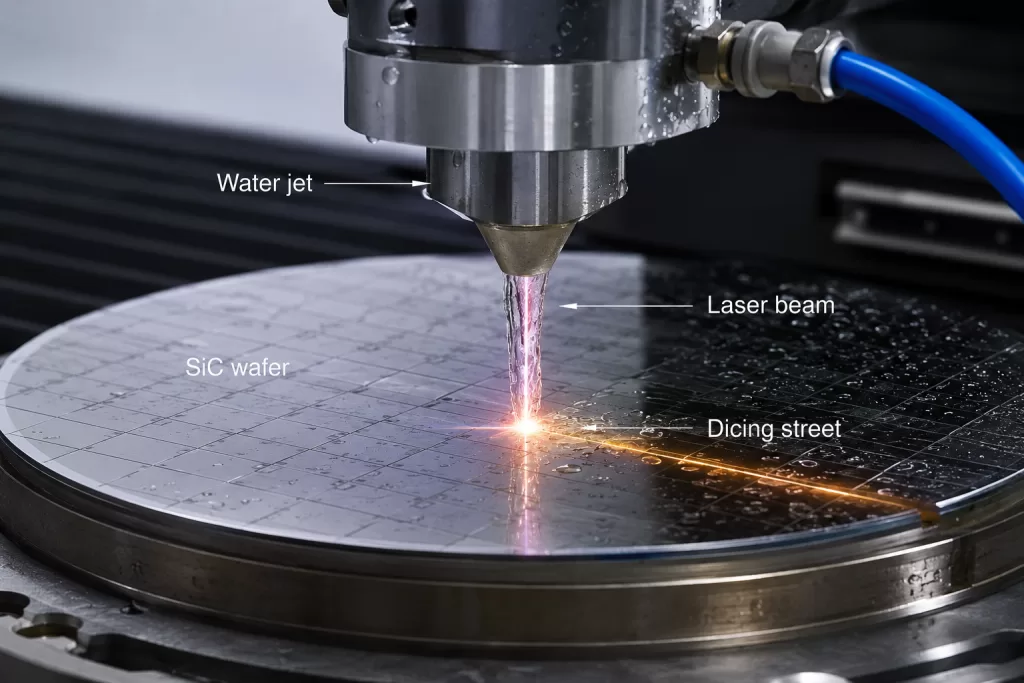
1. Introduction The manufacturing of silicon carbide (SiC) power devices involves highly complex semiconductor processes, typically consisting of hundreds of steps. These processes can be broadly divided into: Among them, wafer dicing (cutting and singulation) plays a critical role as the bridge between front-end processing and back-end packaging. As device miniaturization and integration continue to […]
Why Advanced SiC Manufacturing Matters: Complexity Drives Technology Leadership
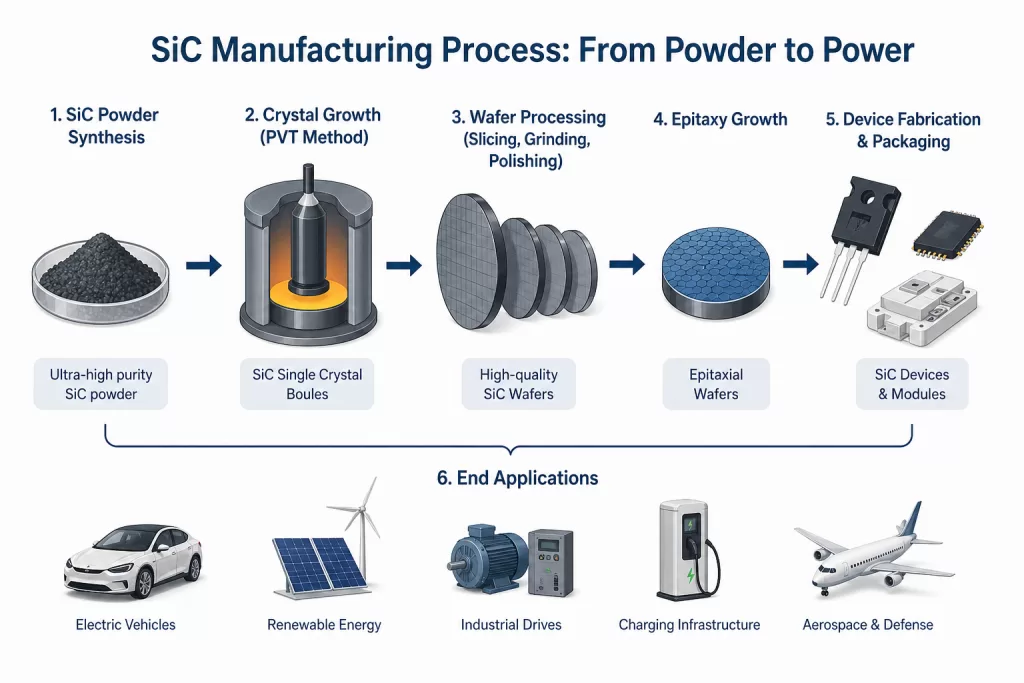
Silicon carbide (SiC) has rapidly become one of the most critical materials in modern semiconductor technology. As industries shift toward high-efficiency power electronics, electric vehicles (EVs), renewable energy systems, and high-frequency devices, the demand for high-quality SiC wafers continues to surge. However, one reality remains clear:the more complex the SiC process, the more critical advanced […]
Thermal Properties of Silicon Carbide (SiC):The Foundation for High-Temperature and High-Power Applications
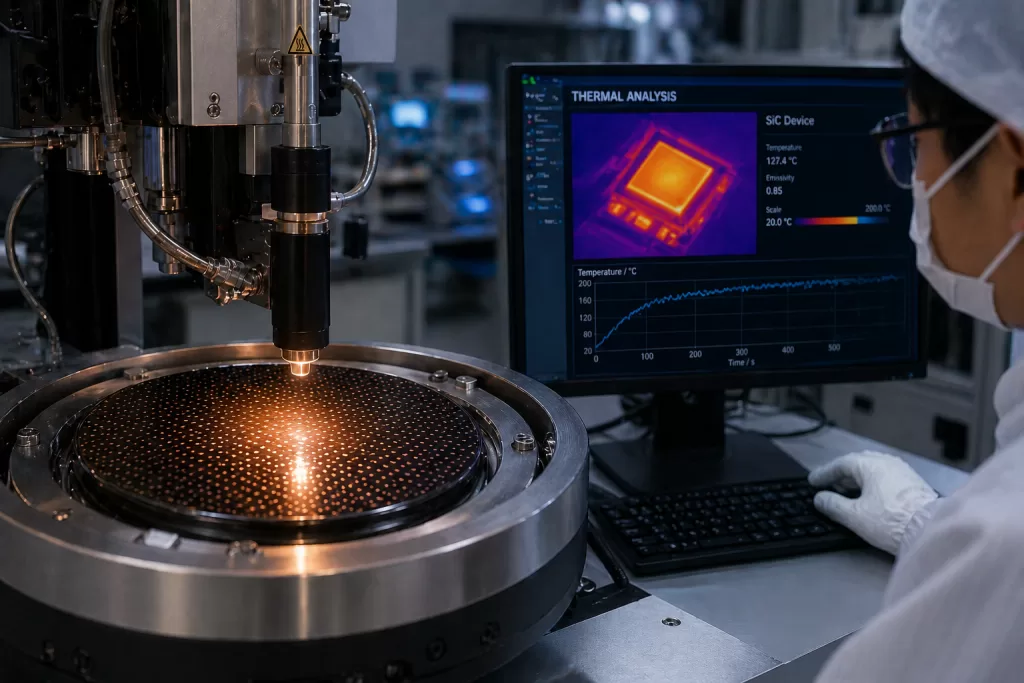
1. Introduction: Why SiC Is a High-Temperature Material of Choice Silicon carbide (SiC) is an advanced ceramic material known for its exceptional thermal stability, high strength, low density, and superior heat management capability. Unlike conventional materials, SiC maintains structural integrity at extreme temperatures while forming a protective silicon dioxide (SiO₂) layer in oxidizing environments, which […]
Silicon Carbide (SiC): Solving Critical Challenges in AR, Space Exploration, and Quantum Technologies Through Multi-Physics Performance
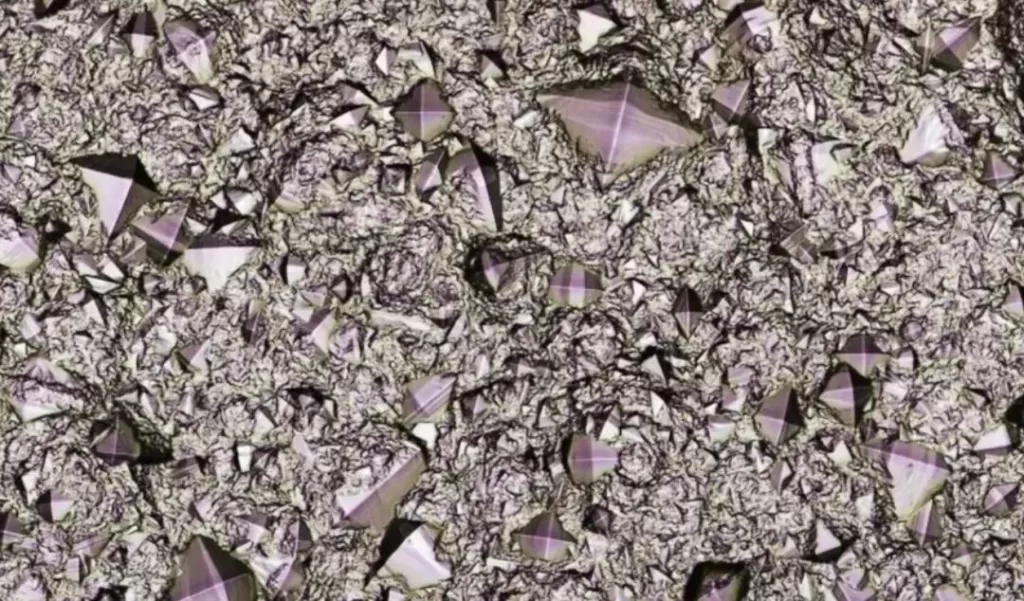
In the evolving landscape of advanced materials, few substances demonstrate the breadth of capabilities seen in silicon carbide (SiC). Often categorized as a third-generation semiconductor, SiC is widely recognized for its role in high-efficiency power electronics. However, limiting SiC to this single application underestimates its full potential. What makes SiC exceptional is its multi-domain performance […]
Silicon Carbide (SiC): The Enabling Material for AI Chip Packaging and Next-Generation Server Power Systems
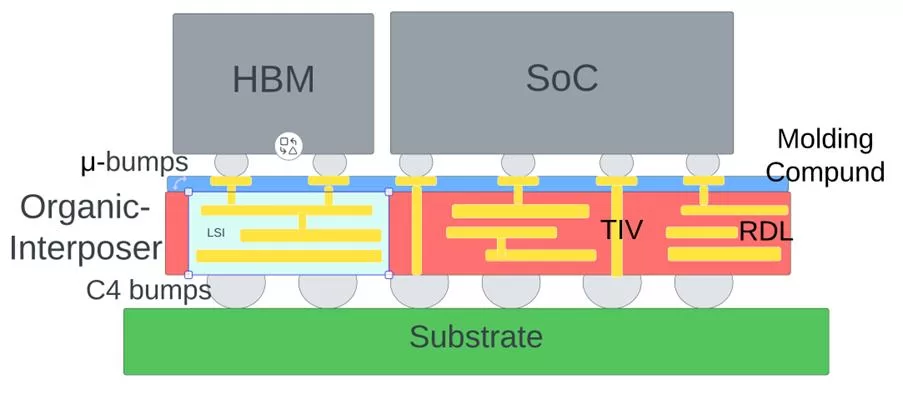
With the rapid expansion of artificial intelligence workloads, both data centers and advanced semiconductor devices are facing unprecedented challenges in power consumption and thermal management. Leading platforms from companies such as Intel and NVIDIA are pushing system power levels to new extremes. Server racks are moving from tens of kilowatts to over 100 kW, while […]
Why Silicon Carbide Substrates Have Become a “Must-Have Material” for New Energy and 5G
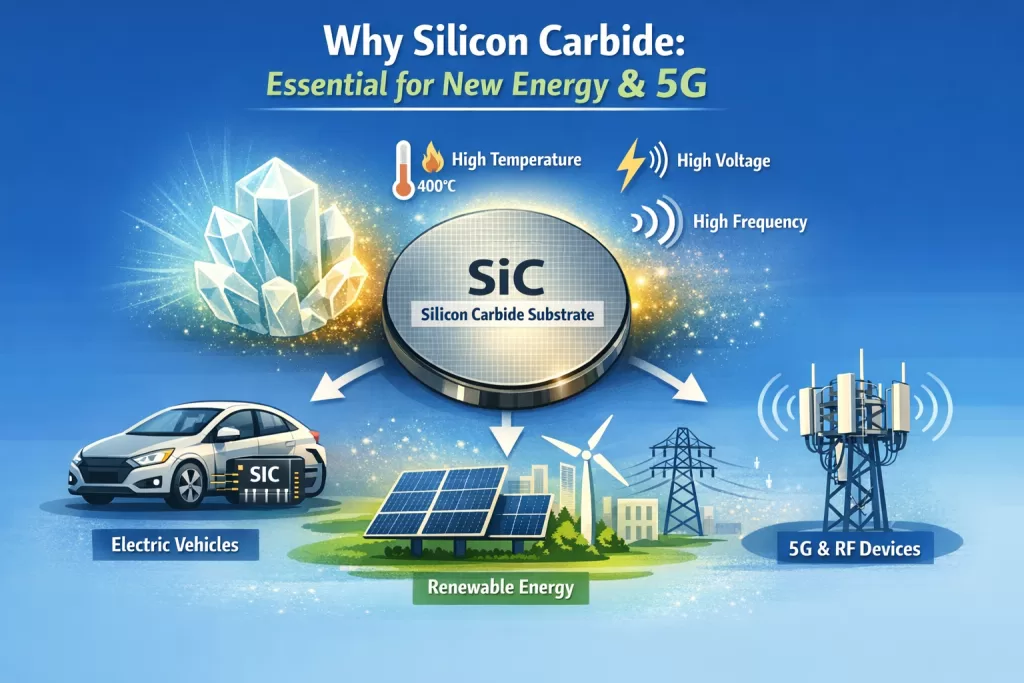
1. Introduction: From Silicon Limits to Wide Bandgap Breakthroughs As global industries accelerate toward electrification and digitalization, conventional silicon (Si)-based semiconductors are approaching their physical and performance limits. Applications such as electric vehicles, renewable energy systems, and 5G communications demand devices that can operate under higher voltages, higher temperatures, and higher frequencies. In this context, […]